My Home Town, by Martha Thomases – Brilliant Disguise
July 25, 2009 Martha Thomases 5 Comments
 My father has a theory that the most interesting people come from small towns. He bases this idea on his experience; astronauts and Walter Cronkite come from the Great Flyover areas. Also, since he grew up in the Bronx, his idea of a small town is somewhat different than the average persons. For example, Cronkite is from St. Joseph, MO, which contains at least tens of thousands of people.
However, I think he’s on to something. I think the most interesting people are those with whom you have the time to swap stories, and this is most likely to be in a small town, or a small city block, or a small bar, or a small living room. If you have the time to have a conversation, and you’re genuinely curious about the person with whom you’re talking, then you have a good chance to get a great story.
I didn’t always believe this. In my pretentious youth, I thought the most interesting people were those who were clearly suffering existential angst, whose sensitive and tortured souls allowed them to experience life in painful and minute detail. Sylvia Plath, Dorothy Parker, and Holden Caulfield were my ideals, even though they were either dead or imaginary. In fact, maybebecause they were dead or imaginary. The absence of any actual possibility of physical contact meant I didn’t have to think about any gross mucus or sweat or odors.
Living an actual life and meeting actual people changed my mind. So did my work. As a writer, I learned it was important to pay attention to actual people, not just legends of actual people, or fake people. I learned this in a time-honored way – by imitating someone more famous and more skilled than myself. For most of 1979, I worked for Norman Mailer on The Executioner’s Song. I transcribed interviews with dozens of people, none of them famous.
Every one was fascinating.
And this was 30 years ago, when transcribing tapes involved a Rube Goldberg-type contraption with a bunch of wires, a pedal, and audiotape. A ten-minute conversation would take me five hours to put on paper (and with a typewriter, not any kind of word-processing software).
Let me say this again. They were all fascinating.
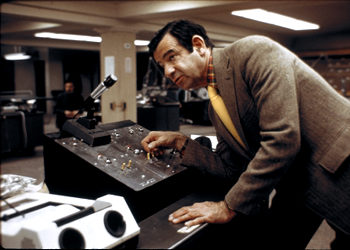
I’ve been thinking about this a lot lately because of two recent movies (and one old one). When the new version of The Taking of Pelham 123 was released, I was interested because not only do I enjoy watching Denzel Washington, John Tuturro, James Gandolfini and John Travolta, but I take the subway with some frequency. WPIX ran the original before I had a chance to see the new one, and it was great. Walter Matthau, Jerry Stiller, Robert Shaw, Martin Balsam and lots of other great character actors showed how ordinary New Yorkers could do the most extraordinary things.
The new version may have wanted to do that, but, for some reason, felt obligated to make the characters less ordinary. They had to create a conflict for the Denzel Washington character, so he could be even more tormented.
I found this offensive, both to New Yorkers and to Denzel. The Matthau character had been mesmerizing. You couldn’t take your eyes off him. Denzel is better-looking. He played an ordinary New York working stiff to great effect in Spike Lee’s Inside Man. Why did a white filmmaker think they had to tart up his back story?
This isn’t about race, not really. I also went to see the extended cut of Watchmen, hoping I’d like it better. Once again, they left out the best parts. To me, part of the genius of Alan Moore in his (and Dave Gibbons’) book is the way he shows the effect of Dr. Manhattan and other superheroes on the lives of ordinary people. Whether he does this with scenes at the newsstand, or with Rorschach and the psychiatrist, or by making the reader infer the lives of the audience for The New Frontiersman and other media, Moore brings the dailyness of life to, well life.
The movie completely ignores this. When we see the people caught in the destruction at the end, there’s no reason to care about what happens to them.
Life is too short and too potentially fun to ignore the importance of each person we get a chance to know. More people might enjoy this if movie-makers could remember it, too.
Martha Thomases, Media Goddess, will try to remember this as she tries to wedge her way through the crowds at SDCC, It may keep her from using her knitting needles as weapons, but don’t count on it if you are wearing a backpack.
pennie
July 25, 2009 - 6:15 am
Agreed. Less deus ex machina and more meaningful plot and character development with substance, not veneer. Then again, I don’t require superficial angst; a new way to explode anatomy or level city blocks.
I bask in subtlety; creative dialogue; challenging perspectives; edges. More Coen Bros. Less John Woo for this cinematic aficionado.
The other thread in your column: small towns and their people. We’ve talked about this for decades. Born in the burbs, lived in big cities and small ones, my heart belongs to the less crowded spots. But I’ve always found that no matter where you are, if you take the time to listen to the stories of people around you, you just learn so much. So many people, so little time.
Hoping you’re having a fabulously satisfying time sweetie.
Howard Cruse
July 25, 2009 - 7:43 am
The new Taking of Pelham 123 (which I haven’t seen) is probably the best thing that’s happened recently for the old Taking of Pelham 123, about which I had been made curious by the invidious comparisons between the two made by reviewers of the new one. When the old one showed up on TV recently Eddie and I watched and enjoyed it, and we probably wouldn’t have had our curiosity not been so stoked by the new one.
Remakes and bad adaptations have that beneficial aspect about them. Has anyone ever watched Lucille Ball in the movie of the musicalized Mame without spending most of his or time thinking “Wow! This reminds me of how funny that line was back when Rosalind Russell said it!”?
Swayze
July 25, 2009 - 10:51 am
My favorite quote about that small-town boy Cronkite came at his funeral by one of his sailing friends: “I was often asked, ‘What he’s really like?’ And I would always answer, ‘He’s just the way you hope he is,’said Mike Ashford”.
I wish everyone were just the way I hope they are.
BTW: New York City is, in some ways, the ultimate small town.
Martha Thomases
July 25, 2009 - 6:52 pm
New York is very much a cluster of small towns. New Yorkers live passionately and patriotically in their own neighborhoods, and merely visit anyplace outside those parameters. I know the guys who watch my street, and the people who work at the restaurants, and the woman who works in my pharmacy – perhaps not by name, buy by stance and greeting.
By the way, although no one has suggested otherwise, I want to make it clear that I adore Denzel Washington and have since St. Elsewhere.
John Tebbel
July 26, 2009 - 7:21 am
Movie casting is tricky. The iconic adaptations of Broadway musicals have usually begun with the original cast, Mame was cursed, as was Hello Dolly.
An the other hand, Mame was a different emotional temperature than Auntie Mame. Auntie Mame would have left Mame in the first act; too sentimental; fuck Christmas, what we need is a drink!
The movie was a disaster, Grandma Mame was more like it. The Tale of the Tape: Angela Lansbury starred in Mame at 41, Rosalind Russell on Broadway in Auntie Mame was 45, in the movie at 51. Lucy was 63, and still playing Lucy Carmichael.
Mary Martin created Sound of Music’s Maria at 45, she would have been 50 when the film was made. Julie Andrews was 30 that year. West Side Story’s Maria was played by Carol Lawrence and Natalie Wood, both 23, playing a girl who’s, what, 16?