Of Course the Kids Aren’t Alright, by Mike Gold – Brainiac On Banjo #192
October 18, 2010 Mike Gold 0 Comments
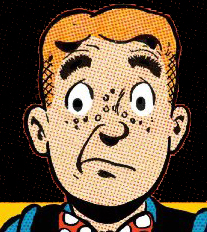 I had two different topics in mind, both traditionally political. As I was fondling their development, a completely different thought started ratting around my brainpan. I don’t know how it got there, but I have a short attention span so I tend to feed the monster.
Here’s the thought. How do we know if a teenager is manic depressive?
Please understand, I do not disparage teens. Not in the least. I was a teenager, as were most adults with whom I hang out. It’s an extremely rough period of time, full of contradictions and artificially imposed restrictions and limitations. This is even more the case in today’s ludicrously over-protective times. The job of a teenager is to be an adult-in-training, and today’s adults do not let teens do anything that can possibly lead to pain – both physical and emotional – or to failure or, pathetically, a loss of self-esteem.
We’re worried about bullying? That’s ridiculous. We adults create the environment where kids can be bullied. Self-esteem comes from success, and you can’t have success without risking failure. In fact, overall we endure more failures than successes: when it comes to self-esteem, it really is better to have loved and lost than it is to have not loved at all.
Being not-yet-adults, teens shift from strong feelings of pleasure to strong feelings of depression and back, and they do so with alarming frequency. Remember? That’s what being a teenager is all about. A lot of today’s kids don’t know that, because we drug the hell out of them. You can’t learn how to manage your emotions unless you are allowed to feel your emotions.
So the base-line for the teenage experience is a sort of manic depression. My question is: how can we tell when that condition exceeds the general teenage experience? How can we tell when there’s a real problem that does need to be addressed?
That’s the hard part of being a parent. As I’ve stated, over-protectionism is counter-productive. We don’t want to wait until our kids jump off a bridge or blow their brains out to find out, but damn, we’ve got to let our kids suffer the hailstorm of slings-and-arrows inherent in being a teenager. By shielding them from all negative life-experiences, they are denied the opportunities to build life-skills. Somnambulistic teens become unprepared adults.
Give the kids every opportunity to make mistakes. Let kids feel some pain. Let ‘em fail and help them learn from it. Get off their backs. If after a while they don’t get up on their feet, maybe there’s a problem.
Beyond growing up.
Fellow-traveler, anarcho-syndicalist and www.ComicMix.com editor-in-Chief Mike Gold performs the weekly two-hour Weird Sounds Inside The Gold Mind ass-kicking bizarro music and blather radio show on The Point, www.getthepointradio.com, every Sunday at 7:00 PM Eastern, replayed three times during the week (check the website above for times). Likewise, his Weird Scenes Inside The Gold Mind political and cultural rants pop up each and every day at the same venue.
Martha Thomases
October 18, 2010 - 7:51 am
To quote from Natasha Vargas-Cooper at The Awl (http://www.theawl.com/2010/10/footnotes-of-mad-men-full-of-demands-empty-of-offerings):
Don’s right—about one thing, at least: teenagers are sentimental. The cynicism with which adults rebel comes from the nihilism of doing what you know is bad for you because you’re old enough to understand that these things usually go unpunished. The kind of joyless self-indulgence that adults traffic in doesn’t exist for teenagers. For the young, it’s unfathomable that act of self-indulgence can bring anything but joy. In the twilight of childhood, you’re not sure what’s like to be an adult but you know what it feels like to not be a child. Every brush with adult behavior—anything from smoking, to sneaking out, to driving, to fucking—is wrapped in a gauzy, loving haze. (It’s bittersweet though: as the twilight of childhood dims, there is within the heart of every teenager a dull throb that comes with the mourning of lost innocence.) What’s alarming, then, is when grown-ups act like teenagers: denying themselves nothing, cherishing their transgressions like merit badges, constantly chasing the beginning of something, unable to parse the sensations of joys from despair.
Vinnie Bartilucci
October 18, 2010 - 10:39 am
We’re at the point where more and more parents are making The Promise when they’re kids (“When I’M a parent, I’m never gonna say ‘No’ to my kids. I’m gonna let them eat candy and be happy and I’m gonna be the BEST parent in the world.”) and never making the realization when they grow up that there was a perfectly good reason that their parents said “no” to them on occasion.
We’re in the untenable position of having a kid with special needs who legitimately NEEDS more protection, but still wanting to loosen the choke chain a bit for fear she become an Indoor Cat for life. She’s never been bullied, she gets along well in school and all told she’s doing nicely. She’s quite happy where she is, and has shown no desire to strain at the leash. As a parent, that sounds like Heaven, but I know full well she’s going to need to know how to do things on her own eventually. So when we go to the mall, I tell her she can go look in the store across the way while I look through the closeout t-shirts at Hot Topic. And when she comes back in one piece (and not in handcuffs), I figure it’s a win.
It’d be all too easy to let her stay in her room watching YouTube clips, but I know she needs to be exposed to germs so she doesn’t drop dead from her first case of the flu, so to speak.
Our policy has been to handle as normally as we can, and any time she has a problem or a weird reaction, we ask “is she having this problem because of her issues, or because she’s a teenager?” It’s worked well so far.
She needs to build up some scar tissue and calluses to prepare her for the world. If we get a situation where she’s more ready to handle the stresses of life than the “normal” kids, I’ll be quite a happy man.
Martha Thomases
October 18, 2010 - 11:26 am
I tend to resist blanket condemnations of massive groups of people. There are rotten parents in my generation (and the two that followed), but that doesn’t mean we all made the same mistakes, or for the same reasons.
If you’re going to look at demographic trends for changes in the lifestyles of teens, you’d have to consider the dual impact of feminism and the economy. By an amazing coincidence, just around the time (middle-class, white) women started to consider having careers outside the home, it got so expensive that they had no choice.
This leaves kids on their own for huge chunks of time during the day. In that time, they often get into trouble. Bunches of them do.
And, yeah, some people expect the state to take care of their kids for them, demanding results from the public school while suing if the kid fails a class. Some people are nuts.
Marc Alan Fishman
October 18, 2010 - 2:11 pm
You want a kid to survive manic depression? Let him get into comics, then form his own little studio right out of college, and watch him try to break into the industry.
No where else can you feel like both a success and failure over the course of 6 hours on the con floor.
Mike Gold
October 18, 2010 - 2:22 pm
Martha sez: “What’s alarming, then, is when grown-ups act like teenagers…”
Martha, you and I and several others here at this site have earned our living in the comic book business, a business squarely oriented to the teen-age mentality. Yet 25% of our readers are 65 and older. No shit — check out
http://www.i-newswire.com/one-in-four-comic-readers-over/63311
And she further sez: “I tend to resist blanket condemnations of massive groups of people. There are rotten parents in my generation (and the two that followed), but that doesn’t mean we all made the same mistakes, or for the same reasons.”
Not everything is about you, Martha. Well, maybe yes, maybe no. I’m obviously referring to our generation of parents and not each and every single parent in it. For example, I believe Osama Bin Ladin’s parents raised their child to be self-sufficient, confident, and bully-proof. I’m sure there have been others. Maybe.
Meanwhile, sales of Ritalin, Concerta, Metadate, Atomoxetine, Strattera, Pamelor, Aventyl, Tofranil, Norpramin, Pertofrane, Effexor, Nardil, and Parnate continue to thrive.
Mike Gold
October 18, 2010 - 2:23 pm
Marc, as far as I can tell, no one in comics survives manic depression. Not a single person. “Survives” is your word; I’d say “fails to wallow in”
mike weber
October 18, 2010 - 6:01 pm
Here ya go – a perfect summation.
JosephW
October 19, 2010 - 2:53 am
Mike, I’m sorry, but you are way off-base here. I don’t have the foggiest notion of what YOU consider “bullying” by bringing up “self-esteem.” Or later, when you write, “we’ve got to let our kids suffer the hailstorm of slings-and-arrows inherent in being a teenager. By shielding them from all negative life-experiences, they are denied the opportunities to build life-skills.” Have you seen the stories that have emerged in the past couple of weeks where kids have killed themselves? These weren’t kids who were being “shielded” from “negative life-experience”–these were kids who WERE being exposed to those “negative life-experiences.” A kid has his arm broken because he wants to be a cheerleader, for fuck’s sake, and you write this off as a “self-esteem” problem or being shielded from “negative life-experience”? Other kids are mercilessly taunted for being “gay” (or just being perceived as “gay”) and they’re somehow lacking “self-esteem” or being shielded from “negative life-experience”? For crying out loud, these kids deal with, almost on a daily basis, continued disparagement from religious leaders and political leaders, as well as their own teachers and classmates, possibly even parents and siblings, and at some point, it’s just too damn much.
The problem with your little treatise is that you’re starting off with one topic (manic depressive teenagers) and then veering off to another (bullying). Bullies are not manic depressives; victims of bullies are not manic depressives. Bullies are encouraged by a society that values “winners” over “losers”–especially in matters of sports–as well as one that values conformity over individuality. For all the GOP’s talk about “individual rights” and “we the people,” there’s been very little in the way of real individualism and recognition of the nation’s diversity that has made this country what it is. Why haven’t we seen more US athletes come out while they’re still actively competing? Especially in the “macho” sports of football, basketball, baseball and hockey (one might add soccer, but it’s still a relatively minor sport as far as Americans are concerned). If one of these “strong” guys would have the balls to come out while still a competetive player, it would do more for “self-esteem,” especially among LGBTQ kids/teens. But, no. For all their macho bravado, they’re wimps. Too afraid of losing endorsements. Too afraid of being taunted by their “teammates.” Coaches and managers have publicly stated they wouldn’t want a gay player on the team. How does all of that fit into an LGBTQ teenager’s self-esteem?
You’ve got dozens of states which have effectively told LGBTQ kids that they’re less valuable than “normal” kids by deciding that marriage is some “special” rite, reserved for heterosexuals only. While most states may have lifted official restrictions against LGBTQ’s adopting or simply acting as foster parents, the reality remains that LGBTQs are pushed to the proverbial back of the bus when it comes to adopting or fostering–even single straights are given preference to an LGBTQ person (and the struggles for an LGBTQ couple are even greater).
Again, if you honestly believe that bullying can be resolved by building up teens’ self-esteem or just simply ignoring the problem by letting kids get bullied in the name of letting the kids “suffer the slings and arrows” and deal with the “negative life-experience,” you are part of the problem. You’ve obviously forgotten the lessons of Columbine as well as the other school shootings. Kids who were not necessarily being bullied, but who definitely faced “negative life-experience,” chose to retaliate and they vented their vengeance on not only those they deemed responsible for their pain but also many who were innocent as well as many who saw what was happening but didn’t get involved.
I usually read your posts and find them informative and frequently find myself in agreement, but not this time. There was NOTHING informative and I can’t possibly agree with your conclusions.
John Tebbel
October 19, 2010 - 6:20 am
Enjoying their boat drinks from the Caymans to Monaco, the folks that run things would laugh to hear us talk about slings and arrows they have insulated themselves from. Yes, little people, I can hear them say, hate the blacks, hate the gays, watch your children eat each other up in those quaint little public schools you think are so expensive. Don’t forget that it’s all your fault, for asking for more.
They would laugh, but our pitiful pissing and moaning is one of the things they use our money to insulate themselves from.
See you at the insulin bar.
R. Maheras
October 19, 2010 - 9:14 am
I’d be interested to see a breakdown of suicide motives (if known) among young people. While a big spotlight is currently on “bullying” as a suicide driver, it seems to me that such suicides would only represent a small portion of total suicides. When I was being bullied in grade school and frequently had to run for my life, I never recall having suicidal thoughts. If anything, such abuse steeled my resolve and made me the sometimes stubborn, independent curmudgeon I am today.
I think that most suicides are driven by a variety of factors, and the trigger — whatever it may be (a failed relationship, bullying, loss of a job, a health problem, a psychological problem, a chemical imbalance, etc.) — is just the final piece of the puzzle.
Vinnie Bartilucci
October 19, 2010 - 9:41 am
OK, I give up, what does the “Q” stand for? I mean, I can guess, but it seems a bit redundant.
pennie
October 19, 2010 - 5:05 pm
Study: Anti-transgender bullying alarmingly high
by Hannah Clay Wareham
Bay Windows
Sunday Oct 17, 2010
More than half of transgender or gender non-conforming people who experienced bullying or harassment have attempted suicide, according to a recently released study.
The National Transgender Discrimination Survey, conducted by the National Gay and Lesbian Task Force and the National Center for Transgender Equality, revealed that 41 percent of respondents had attempted suicide, compared to a national estimated rate of 1.6 percent.
“From our experience working with transgender people, we had prepared ourselves for high rates of suicide attempts, but we didn’t expect anything like this,” said Mara Keisling, Executive Director of the National Center for Transgender Equality. “Our study participants reported attempting suicide at a rate more than 25 times the national
average.”
Rates of attempted suicide rose dramatically — to 59 percent — when the victim’s teacher or professor was the perpetrator of bullying or harassment. Among those who had been physically assaulted by a teacher or professor, 76 percent reported having attempted suicide.
“These shocking and disheartening numbers speak to the urgency of ending bullying in our nation’s schools and ending discrimination in our nation’s workplaces. We know from the recent rash of suicides
among young people who have been bullied just how critical it is that we act now and act decisively to save lives,” said Rea Carey, Executive Director of the National Gay and Lesbian Task Force.
pennie
October 19, 2010 - 5:20 pm
The “Q” in LGBTQ stands for “Questioning.”
Whitney
October 20, 2010 - 2:36 am
Some cultures don’t distinguish this transitional phase of adolescence. When puberty hits, you are a man or a woman and are expected to take on that identity, rights and responsiblities. Rituals of the Red Tent.
I’ve wondered if this might be – in some careful respects – a more healthy way to raise up the next generation. It seems like in Western culture that teens have the the worst of all worlds: the constraints of being children with the responsibilities of adulthood (choose a life path NOW) housed in a body with the rocket fuel of hormones.
Maybe part of the solution is to give teens the respect of adulthood, the opportunities to be impacted by both the good and the bad of their choices, and kind, wise direction on how to maneuver with their new bodies with a V8 engine that will sometimes need to parallel park as they drive through life.
Mike Gold
October 20, 2010 - 2:17 pm
Joseph — You’re entitled, but we disagree here. I think you missed the point, a point that other folks seem to have grasped.
Not that I disagree with a lot of what you said, particularly the comments regarding the “value” of LGBTQ kids over the “normal” kids. The latter phrase, of course, is an oxymoron.
Getting kids to stand up for themselves will relieve neither bullying nor typical adolescent insecurities. However, getting kids enrolled in martial arts training at a young age, which I have advocated frequently in this chunk of the ether, will help kids on the self-esteem front and might get a couple of bullies their due. It’ll also teach kids some manners, which is another thing my generation hasn’t been very good at.