We Deserve It, by Mike Gold – Brainiac On Banjo #203
January 3, 2011 Mike Gold 0 Comments
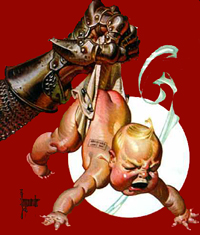 Yeah, I know. It’s the first one of the year. I’m supposed to be all full of hope and optimism and give us all some ennobling, enabling words to cheer us on to the new rose-plated path.
Fat chance. Hey folks, this is Mike Gold here. C’mon, get real.
This fact is, just about everybody I know or I’ve read about had a 2010 that was crappy at best. Some of us, more than a reasonable few, suffered enormous, brain-chilling loss.
Our political parties were too busy playing Red-Rover Red-Rover with each other to actually allow for any actual governing opportunities. No truly awesome new music came out last year that I can recall; the performers I latched onto had been around for a couple years but were new to me. The only book of real importance (by my definition, of course) that came out was Mark Twain’s uncensored autobiography, and we’ve been waiting 100 years for that one. There were a couple okay teevee series and one brilliant new series, which is pretty pathetic given all the hours and half-hours that debut each year on broadcast and cable. And maybe… maybe there were a couple okay movies.
2010 was so evil the only truly interesting threats were those that, less than a decade ago, we would have branded preposterous – if we could have thought them up in the first place. A website getting traction over boycotting the Thor movie because one of the Norse gods will be played by a black actor? Another website getting traction over the story that Batman appointed a Muslim as his crime-fighting agent in France? That a town in Tennessee would rather go bankrupt than permit a Muslim church to be built? That a Republican politician would get real mileage out of her accusation that the First Lady’s “eat healthy” advice to children is a federal government take-over of child rearing? That Pat Robertson would come out for the de facto legalization of small amounts of marijuana?
Preposterous. I told you so.
2010 was one sad, sick, ugly belladonna overdose.
Do you know why we wish each other a happy new year? That’s because we’re too pissed off to congratulate each other for surviving this past year.
Wishing somebody a happy new year is more than just an act of optimism, it is what we deserve. The only great thing about the new year new-deal is this: each year we do our best to make it work. We can’t help ourselves.
Let us all enjoy a happy new year. We deserve it.
Moper, psycho-metaphysician and www.ComicMix.com editor-in-Chief Mike Gold performs the weekly two-hour Weird Sounds Inside The Gold Mind ass-kicking bizarro music and blather radio show on America’s pop culture channel The Point, www.getthepointradio.com, every Sunday at 7:00 PM Eastern, replayed three times during the week (check the website above for times). Likewise, his hilariously offensive Weird Scenes Inside The Gold Mind political and cultural rants are foisted upon the listening audience each and every day at the same venue.
R. Maheras
January 3, 2011 - 12:00 pm
May 2011 be a good year for all!
Me, I wouldn’t mind starting it off by winning the more than $300 million Mega million jackpot.
I’m just sayin’, you know?
Martha Thomases
January 3, 2011 - 2:36 pm
@R: Lotteries are a tax on the poor.
Happy New Year! It’s great to be back in New York!
Mike Gold
January 3, 2011 - 2:56 pm
Martha — How do you figure? I don’t understand how the lotteries are a tax on the poor.
Nobody holds a gun to anybody’s head forcing them to buy a government-sponsored lottery (boleta might be another matter). If the argument is that they’re poor and therefore more desperate and therefore more likely to feed that desperation with the lottery, I say “horse hockey.” The poor are no more likely to succumb to deviant behavior than the wealthy and the middle class, and them latter two groups buy a hell of a lot of lottery tickets. Check out the receipts in Greenwich CT, and the only poor folk they got around there are the immigrants who sell the lottery tickets — and live elsewhere.
So I figure there must be some other reason I don’t understand. Please illuminate.
And welcome back!
Marc Fishman
January 3, 2011 - 5:28 pm
2010 was a pretty craptastic year, I”ll give you that. But I’m still to young to be bitter. I look towards 2011 with shiny happy feelings. I got a new day job… decent freelance opportunities… a new home… a wife… my two best friends within 20 minutes of me… and atleast one non-creaky knee. So, for now, I can only hope that in the coming year we all get what we deserve and work so hard for.
And Mike? You deserve a metric ton of good.
MOTU
January 3, 2011 - 5:32 pm
I’ve been sober ALL year. Eh, wait a second…never mind.
Doug Abramson
January 3, 2011 - 9:02 pm
R,
Hands off buster! That jackpot is mine!
Martha Thomases
January 4, 2011 - 6:32 am
Lotteries are marketed to less affluent (and certainly less educated) people. True, there is no force involved. However, successful people don’t play the lottery. Bill Gates doesn’t. Donald Trump doesn’t. Angelina Jolie doesn’t. You have a better chance of getting struck by lightning than winning, yet millions of people eagerly fork over their hard-earned money to the government because they think they can beat the odds. And forking over your money takes less effort than trying to beat the odds by, say, getting more educated.
Mike Gold
January 4, 2011 - 7:32 am
Before the governments started competing with the numbers racket, and to a considerable extent to this very day, people have played the numbers — a.k.a. boleta. Poor people, middle income people, and more than a few wealthy. Anybody who was in radio before the lottery started got the crash course in the numbers racket.
There’s no teevee advertising for the numbers, no radio, no signs at the local convenience store, no “Three Stooges” licensed lottery tickets (which, b.t.w., is actually pretty cool — I first saw them a few years ago near Martha’s home town in Ohio). There’s no difference between the numbers racket and the lotteries except the former doesn’t hire a sexy chick to read off the balls on the tube every night.
How do you know Gates, Trump and Jolie do not play the lottery? They could easily tell one of their assistants (or, in Jolie’s case, kids) to go out and buy a bunch. Excessive (compared to income) gamboling is a DNA-linked trait akin to excessive alcohol or drug consumption — roughly one out of nine humans have it. And Jolie is an actress. Ergo a gambler.
I repel the premise that “millions of people eagerly fork over their hard-earned money to the government because they think they can beat the odds.” Poor people are not ipso facto stupider that rich people, and millions of people eagerly fork over their hard-earned money because they think that given their situation it’s worth a shot; they’re not surprised when they lose. Gamblers rarely are.
Let’s assume the people who wait in line for an hour to buy three hundred dollars of tickets are either wealthy or are representing a pool of gamblers, usually at work.
So let’s say the average individual’s buy-in is $5.00 a week. Okay. $5.00 times 52 weeks is $260.00 a year. You think $5.00 a week is too low? Okay. Let’s say the average individual person’s buy-in is $10.00 a week. OK, $20.00 a week. That’s $1,040.00 a year.
Where are you going to get yourself more educated for $1,040.00 a year?
And explain to me how an adult getting “more education” results in teleportation to middle class. Yes, people with masters degrees were three times more likely to have had a job in 2010 than those without. So… where do you get college and a masters degree for $1,040.00 a year?
The lottery is a sucker bet, but it’s cheaper than Night Train.
Martha Thomases
January 4, 2011 - 7:42 am
“The lottery is a sucker bet, but it’s cheaper than Night Train.” Exactly.
Waiting for Pennie to weigh in. She’s the expert.
Marc Alan Fishman
January 4, 2011 - 8:10 am
My father played ‘1118’ straight-box every day, for 4 years, after buying the house I grew up in (1118 w. 191st street) in Homewood.
The day he stopped betting was the day 1118 was drawn.
R. Maheras
January 4, 2011 - 9:17 am
Martha wrote: “Lotteries are a tax on the poor”
I must be poor then. I regularly buy lottery tickets, and my wife and I give them out as Christmas stocking stuffers.
Mike Gold
January 4, 2011 - 9:23 am
Yeah, my mom used to buy ’em. She thought it was fun. She didn’t mind losing a buck, and when she won back two or five, it was like her birthday. She didn’t pass along that gene to me (I got my father’s Italian beef and Fannie May gene instead), but it made her happy. It still would, if she could see the damn numbers.
pennie
January 4, 2011 - 9:50 am
Martha wrote, “Waiting for Pennie to weigh in. She’s the expert.”
I apologize in advance for the bandwidth. The following passages are excerpted from a book I wrote in a different galaxy, far, far away…
Lotteries have been around for thousands of years in all forms. Then again, so has gambling. Archeological excavations have unearthed gambling artifacts from nearly every civilizations dating back many millenia.Name your favorite region and culture–gambling was a part of it: Etruscan, Babylonian, Ancient Asian, European, African, Native American, and Colonial American.
I think we all agree that lotteries are an inexpensive form of, generally speaking, non-ritualistic gambling (although I’m positive some create their own personal lottery rituals).
What do R. and Doug (above, as examples) both want? The same thing that all lottery players seek–a life-changing sum of money that didn’t cost much. Of course, the other side of the coin (so to speak) are the scores of people who have been graced by the gods and Fortuna and won big, only to squander all of it within a short time and wind up broke. Google it. You’ll see.
I quote from my book…
“Forgotten by many is the fact that the original Puritan settlers of the United States funded their voyages across the Atlantic through the use of lotteries. Apparently, it was all right to use gambling as a means to get them here, but once they took root in their New World, gambling was not to be allowed. It was deigned a sinful activity causing the practitioners to rot in everlasting purgatory or hell. These beliefs were not embraced out west in general nor in Nevada.”
“Not to say that the colonists didn’t gamble. In fact, in 1612, the Virginia Company, in a severe financial crunch due to poor personnel and fiscal planning, requested and was granted an extension of their charter by the crown, King James I. Among these new provisions was one giving the company the authority to raise funds by holding lotteries. Although common in many other parts of the world, the British were not as familiar with lotteries in the beginning of the 17th Century, and this act represents one of the first official acknowledgments and uses of a lottery by the British government.”
“Unrealistic expectations concerning a return on their investment were laid to several factors: harsh winters, illness and disease, and a continuing reliance on the company to supply them with basic provisions rather than a hoped-for self-reliance characterized the Jamestown, Virginia settlement. Notwithstanding the fact that the company had spent thousands of pounds to send hundreds of people to the New World, they hadn’t turned a tuppence of profit.”
Rather than seeing themselves as the source of the problem as an underfunded group whose poor planning was directly responsible, the officers laid the blame for their lack of success squarely on the shoulders of the settlers. Not that they were blameless, as few were adequately prepared for the conditions they faced, physically or emotionally. They had also been misled by the company’s descriptions of a life of ease awaiting them, leaving them expecting less than a full work-week. Gabriel Archer who arrived at Jamestown in mid-1609 echoed Captain John Smith’s comments from the colony’s inception when he told London that “Idleness and other vices,” were responsible for the colonies failure to date.”
Chief among those “other vices” was gambling, for which the colony developed a healthy reputation that lasted well into the 1630s and 40s. This strong attraction for gambling resulted in the passage of regulations between 1610 and 1612 which specifically prohibited certain types of gambling and were the first of many more to follow. So prevalent was gambling among all professions that the Virginia Assembly enacted a law in 1624 stating that, “Ministers shall not give themselves to excess in drinking or yette spend their tyme idelie by day or by night, playing at dice, cards or any unlawful game.”
“The officers of the Virginia Company, anxious to raise more funds, eager to prevent a total loss of their investment didn’t waste any time in throwing the lottery open to the public with four different raffles held in London between 1612 and 1614. Three of these lotteries required all tickets to be sold prior to a prizewinner being selected. The fourth bore more of resemblance to modern “scratch tickets.” The purchaser knew his fate immediately.”
“The lack of familiarity with the product combined with the tickets’ high prices made for poor sales: the first three lotteries were postponed. When a London tailor was the announced winner of 4,000 crowns amid great fanfare, the company thought their concept would catch on. They were wrong and faced a distinct lack of interest and a great amount of suspicion amongst the city folks. They countered by sending runners to adjacent smaller cities and villages and enjoyed a greater success.”
“Severely in debt, the Virginia Company became totally dependent on the lotteries as their sole funding, with the plantation colonists well aware that their critical lifeline owed a debt to their former countrymen’s faith in their gamble. As there had yet to be any returns on initial or subsequent investments, with charges of fraud and mismanagement levied at the Company, and Parliament up in arms due to the King’s tactic of excluding it from the decision-making process concerning the lottery, the House of Commons requested James reverse his decision. On March 8, 1621, the King issued a proclamation banning any subsequent lotteries, explaining that he had issued his original decision due to the company’s imminent failure and he recognized that the company was generally regarded as a nuisance to his subjects.”
Deprived of their sole source of revenue, the Virginia Company’s fate was sealed and it was to no one’s surprise that bankruptcy was declared in 1624. The colonists were cut loose from their lifeline, and finally forced to fend for themselves with their fates resting on their own abilities for self-sustenance. This small footnote in the settling of America perfectly illustrates the ambivalent approach taken by the British and their representatives in the American colonies. At once embracing and then rejecting various forms of gambling, there was a great uncertainty when it came to attitude that was markedly different from other countries on the European continent.”
“Lotteries were used by both the colonies and England to finance any number of interests. Those that worked did so because the participants agreed with the cause involved so that even if an individual did not win, he at least derived the satisfaction that he was contributing to a caused in which he believed. If there was a tangible result from a wager that was really a contribution with a chance for a return, so much the better. The colonial lotteries were used for the construction of churches, schools, public buildings, community improvements, roads, bridges, wharves, forts, new industries, as well as the relief of debts and charities. Naturally, the Puritans and the Quakers were quick to disavow interest or use of the lotteries as financial instruments, but most of the other colonies and groups didn’t have that problem.”
“Colonel Joseph Pendleton of Rhode Island suffered the loss of an uninsured ship bearing his cargo of molasses in 1750. He petitioned the authorities to allow him to turn some of his property into cash by holding a local lottery. He sold 15,636 pounds worth of tickets, returning 5,272 pounds in prizes, clearing a profit of 10,364 pounds in profits. He used this money to purchase more property naming the town which grew around it, Lotteryville.”
“There were even lottery brokers who would rent you a lottery ticket based on a certain number of days if you could not afford the purchase price. Any tickets unsold rose in price if the main prize had not yet been claimed. The main outlet for lotteries wee print shops and booksellers
As friction between the colonies and the Crown increased throughout the 1760s, British authorities attempted to tighten their controls by exacting taxes and regulating lotteries. The Board of Trade launched the offensive in 1769 by making the strong recommendation to each colonial governor that their legislature not allow lotteries without written permission from King George III. The British were against the colonial lotteries for several reasons: they were wary of the value of paper currency from the New World to begin with and saw these lotteries as feeding yet another worthless institution; the were concerned about the effect on trade and commerce; they didn’t like the unauthorized use of lotteries competing against those authorized by the Crown including those directly funding British causes; and the British simply wanted to keep the colonies under their thumb.
When this friction turned to war in the late 1700s, the Continental Congress authorized a grand lottery to raise $1,500,0000 to fund the military effort against Great Britain, ironic as immediately prior to the war local “committees of morality” spent a great deal of time and energy in an effort to warn the populace concerning the evils of gambling. The United States Lottery was started in 1777 with this advertisement, “It is not doubted but every real friend of his country will most cheerfully become an adventurer, and that the sale of tickets will be very rapid, especially as even the unsuccessful adventurer will have the pleasing reflection of having contributed a degree to the great and glorious American cause.”
“Sounds strangely reminiscent of the Virginia Company about 150 years previously. The lottery suffered due to a lack of participation and when 5-year promissory notes were issued at 4% interest, later raised to 6% with few takers, it was abandoned before all of the winners had received their prizes. It was obvious that funding the American Revolution would need another revenue stream.”
“In Colonial and Frontier America, lotteries got so out-of-hand, they were banned by most states until the middle of the last century. When Alexander Hamilton organized the federal monetary system to stem the chaos existing in the young country by setting up the Bank of the United States in 1791, there was an immediate public reaction. The new bank scrip was grabbed by speculators, particularly in the major urban areas of New York, Philadelphia, and Boston. Lotteries were often point to as particularly evil as they had grown out of control from the smaller, more localized version of the mid 1700s. The more conservative of the voting public declared that lotteries specifically and gambling in general would ruin the new country. By the 1820s, lotteries were utilized by many large private companies whose sole source of income was dispersing agents over a large area to sell tickets for profit. One of these agents was a teenager named Phineas T. Barnum who was well-schooled in the 1820s in the lottery business and used some of this knowledge later on in life to build his barnstorming circus.”
“Problems of abuse clouded many of these operations with scandals erupting in almost every state, obscuring the fact that there were legitimate enterprises for often worthy causes. But it became increasingly difficult for the American consumer to distinguish between honest and corrupt companies. In retaliation, between 1830 and 1860 when he Civil War began, almost every state banned lotteries and this situation remained static until 150 years later in the mid-century 1900s.”
“The legal lottery was banished from America, but gambling had become sewn into the fiber of the crazy quilt of the colonial New World and then the new country. The debt to England for passing on certain games, traditions and rituals is clear. But also clear is that the heart and soul of gambling in this country didn’t arrive from the British but came from a stew-pot marriage that was more Mediterranean, Asian,Continental European, Caribbean, African, Mexican and frontier American, honeymooning on a river, before going on an extended tour of the West.”
“The mid-to-late 1900’s marked a turning point in American life: legalized casino gambling had “spread” beyond Nevada’s borders into the hinterlands and in retrospect, “they” were right! Once Pandora’s box was opened letting gambling escape outside Nevada, the inevitable occurred, there was no turning back. The 1978 opening of Atlantic City wasn’t an isolated incident. First, New Hampshire followed quickly by Massachusetts, New York, New Jersey, and Pennsylvania all authorizing legal state lotteries with New York allowing off-track betting, using the revenues produced from these activities to fund all sorts of projects.”
You asked. Thought I’d lay a bit of history on you. There’s more, so much more–like, oh, about 5,000 pages…
PS: all of the passages above are copyrighted by me.
Mike Gold
January 4, 2011 - 10:00 am
One day about a thousand years ago, a couple of government agents dropped by my radio station. I was used to seeing government agents, but in those days they rarely ambushed anybody when in a house of the media.
Turns out they weren’t ambushing me, either. Somebody was using my radio show as a means of generating random boleta numbers. A quick check of my FBI file showed them it was unlikely that I was a participant, but they wanted to know why and how I made certain programming decisions — songs I’d play, when I’d do PSAs (as opposed to commercials), that sort of thing. They were surprised to see how random it was — the idea of actually planning out my radio shows didn’t occur to me until 2009.
Turns out back in that era, the early 70s, before government lotteries a LOT of progressive rock disc jockeys were visited by government agents regarding the numbers racket. Not all were as pure of heart and intent as I was.
Reg
January 4, 2011 - 10:59 am
@ Pennie… Good stuff! What’s the name of your book if you don’t mind sharing?
MOTU
January 4, 2011 - 1:42 pm
“The lottery is racially biassed.”
What?
Vinnie Bartilucci
January 4, 2011 - 3:01 pm
Isn’t comment creep fun?
The main difference between the lotteries and numbers run by, ahem “certain people” and the ones by the government is the payout. The illegal ones pay out about 90-98% of the take, the government ones…well, much less. Dave Barry had a column about it years back, of which I was not able to find a copy.
I play the lottery, based on the following mindset. The odds of winning the lottery is umpty-ump million to one. The odds of winning if you don’t have a ticket is infinitely improbable. That’s a good enough jump in odds to warrant the purchase. The people who are buying 50 tickets at a clip are only increasing their chances microscopically. umpty-ump million to one and umpty-ump million to fifty are functionally the same.
And the venture capitalists who buy huge numbers of lottery tickets…don’t get me started.
Reg
January 5, 2011 - 6:40 am
Offered without comment… :-p
http://m.cnn.com/primary/_DhquRe-i8A4bWqsQVo
Reg
January 5, 2011 - 8:33 am
Ooops. Again…Offered without comment.
http://www.cnn.com/2011/US/01/05/lottery.lost/index.html?iref=allsearch
R. Maheras
January 5, 2011 - 9:23 am
I didn’t win.
😉