Media Mogul is a Rotten Job, by Mike Gold – Brainiac On Banjo #273 | @MDWorld
May 7, 2012 Mike Gold 15 Comments
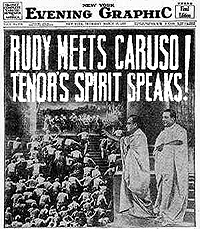 With great power comes great ego, and historically there has been no better ego-booster than the successful control of information. For today’s history lesson, we are going to look at a trio of contemporary media barons.
For Canadian-born mogul Lord Conrad Black, the good news is he’s finally out of prison. The now-former owner of the London Daily Telegraph, the Jerusalem Post, the Chicago Sun-Times, the Catholic Herald and Canada’s National Post, among others, was convicted of defrauding his own company of $60 million, later adjusted by a sympathetic appellate court to one count of mail fraud and one count of “obstruction of justice” – the latter a made-up crime. That cost him a ton of money, most of his power and 42 months of his freedom.
His is an interesting story, but nobody really cares. We all care about the Australian Charles Foster Kane, Rupert Murdoch. He suffered a fate that, one can argue, was even worse to a man of his ego and position that that suffered by Lord Black. He was condemned by Great Britain’s House of Commons Committee on Culture, Media, and Sport (sic) as “not a fit person to exercise the stewardship of a major international company.”
Man, that’s gotta hurt.
The guy runs Fox News, the Wall Street Journal, the Times of London, the New York Post, England’s The Sun, and lots of other stuff. Rupert is distained by all left-thinking peoples for his support of far right-wing politics and the hiring of the soul of the dregs of the Republican party, the paranoid Roger Alies, to run his Fox News racket. He was called out by the House of Commons for running his now-defunct paper News of the World, as though it were a masterpiece of yellow journalism.
This is unfair. Yeah, sure, his reporters hacked into people’s cellphones and computers, terrorized politicians and celebrities and oriented their reporting to suit the political needs, desires and whims of management without regard to fairness or accuracy, but compared to people like Joseph Pulitzer, William Randolph Hearst and Bernarr Macfadden, Rupert is a model of journalistic morality. He gives the people what they want – News of the World was the biggest selling English language newspaper in the world – although he drapes it in his politics.
A previous British media mogul, Robert Maxwell, held similar power and authority in his ownership of the London Daily and Sunday Mirror, the New York Daily News, Collier and Macmillon books, and, again, lots of other cool stuff. Maxwell was so damn interesting he could have been hired to sell Dos Equis.
A fairly left-leaning mogul, Maxwell and two of his kids were accused of looting their companies’ pension funds in order to stay in business. Robert didn’t live long enough to see the outcome: in 1991 the 68 year-old media baron was found floating facedown in the Atlantic Ocean off of the Canary Islands. Sadly, things only worsened for Maxwell after his death: it was revealed that he had “ties” to the Mossad and was even an agent of that Israeli intelligence service. He was then immortalized as the villainous Elliot Carver in the James Bond film Tomorrow Never Dies. Mind you, being portrayed by Jonathan Pryce is almost as cool as having Orson Welles front your story. His life and/or death also inspired a great many novels and several television shows and radio plays, and Maxwell’s posthumous visage also graced an Iron Maiden single.
I have always been fascinated by these people and their ink – the aforementioned Joseph Pulitzer, William Randolph Hearst and Bernarr Macfadden as well as folks like Lord Beaverbrook (William Maxwell Aitken), the Medill/McCormack/Patterson family, and others. Each wielded enormous influence on every level; many, if not most, wound up broken, endeared in the manner in which we regard Al Capone, Charlie Luciano and Meyer Lansky.
Today we have an entirely different type of media baron. Thus far we have not produced a Hearst or a Murdoch – or, perhaps, we have but these folks have learned the lesson of their predecessors.
Personally, I doubt it. I believe once they get the power that comes with success, the great Internet barons will suffer from the same disease that brought down the others: a professionally fatal case of hubris.
—-
The Lamont Cranston of Influence, Mike Gold performs the weekly two-hour Weird Sounds Inside The Gold Mind ass-kicking rock, blues and blather radio show on The Point, www.getthepointradio.com, every Sunday at 7:00 PM Eastern, replayed three times during the week (check the website above for times) and available On Demand at the same place.
mike weber
May 7, 2012 - 10:48 am
“Personally, I doubt it. I believe once they get the power that comes with success, the great Internet barons will suffer from the same disease that brought down the others: a professionally fatal case of hubris.”
Wossname at Facebook is already beginning to show the symptoms.
Mike Gold
May 7, 2012 - 11:04 am
He’s hardly alone. Google much?
Martha Thomases
May 7, 2012 - 11:11 am
Oddly, magazine barons, while also frequently crazy, tend towards more benign excess. Hugh Hefner, Felix Dennis, Si Newhouse – just off the top of my head – tend to be less overtly political. Maybe it’s because they spend more one-on-one time with advertisers.
Mike Gold
May 7, 2012 - 12:28 pm
Hefner has been incredibly political, fighting the good fight for First Amendment, reproductive, homosexual and military freedoms — personally, through his magazine, through his personal foundation and through the magazine’s foundation. And he got beat up by the cops at the 1968 Democratic Conventions as well. Newhouse’s newspapers were pretty active in political maneuvering; the magazines probably not. And probably never for anything you or I might support. You certainly know more about Dennis than I do; I can’t think of his risking anything over political involvement.
The most politically active media mogul of the past 40 years outside of Rupert is Fred Eychaner, who avoids the public light so completely he’s often referred to as a hermit. Not in my day; I knew Fred, I worked with Fred, he got me work, I love him and I’d take a bullet for him. Eychaner learned the lesson Al Capone and John Gotti never figured out. Well, make that TWO lessons. Google him, if you’re unfamiliar with him.
Martha Thomses
May 7, 2012 - 12:45 pm
Felix Dennis supports a weird tree charity. At Conde Nast, the newspapers are a different division than the magazines. I don’t think Si was involved with that.
Hef is political, but a step removed. Not like Murdoch. He didn’t start a money-losing business like Fox News just to promote his cause.
Rick Oliver
May 7, 2012 - 1:16 pm
AFAIK, Fox news is incredibly profitable. And I read somewhere that even Murdoch thinks Ailes is a little too far out there, but he lets him do his thing because it makes buckets of money.
Everybody thinks the world would be a much better place if everyone just agreed with them. And if you’ve got enough money to try to make that happen, a media empire is the place to start. The fallacy, of course, is assuming you’re actually changing people’s opinion rather just validating the opinions of those who already agree with you.
Mike Gold
May 7, 2012 - 2:58 pm
Martha: Agreed a-t-b. But I’m still dealing with the phrase “weird tree charity.” Where are those weird trees? Is there an IMAX movie about them? Is Thor in it?
Mike Gold
May 7, 2012 - 3:47 pm
Fox News is incredibly profitable because “news” channels without actual news crews — correspondents, editors, field producers, camera crews, satellite vans — are incredibly cheap to produce. But that profitability is jeopardized by the ever-increasing age of its already-geriatric audience. If not for term-life insurance, gold scams and boner pills, Fox News would be broadcasting crickets chirping.
However… what you say, Rick, is absolutely correct. The same thing applies to Fox’s airing of the left-wing show The Simpsons ever since Barnabas Collins started teething. And Rupert appeared on The Simpsons.
The story goes, and it’s well-known even in Republican circles, Roger Ailes scares Rupert. But Ailes is a lot more profitable than Glenn Beck.
Pennie
May 7, 2012 - 3:56 pm
Jann Wenner anyone?
Mike Gold
May 7, 2012 - 4:31 pm
Not much of a mogul and, outside of his donations and charitable work, he’s not really an earth-mover. To his credit. Saw him on the Rock!n’Roll Hall of Fame Awards — he’s still looking pretty good.
Pennie
May 7, 2012 - 5:11 pm
Mike, Wenner does not tip the heavyweight scales like your crew but if one of the qualifications of media mogul is longevity and another, domination of field, then Wenner fills those criteria. Of all the music zines from the ’60s and before–Downbeat, Creem, New Musical Express, Crawdaddy, Melody Maker, etc–Rolling Stone still thrives. Wenner has branched out to other mags and media and you’re right–he still looks good.
Mike Gold
May 7, 2012 - 8:00 pm
It’s been a long time since I’ve regarded RS as a music zine, and in that lurks a bigger compliment: it’s a general interest magazine covering media, politics and culture. We used to have lots of those — back in the 30s. Since the 60s, not so much. So good for Wenner.
I miss Crawdaddy. Wrote for it a little bit. Great music magazine. And the son of the editor of Down Beat was a college roomie of mine. I thought it was still around — I’ve drifted some from the jazz world. But I do have a goatee… this week.
Jeremiah Avery
May 10, 2012 - 5:58 am
It’s a bit humorous the Pulitzer Prize is awarded to (amongst other categories) the very best in journalism; considering it’s named after a man who, along with Hearst, laid the foundation for the tabloid press and fake news that we have today.
Mike Gold
May 10, 2012 - 8:55 am
Sorta like the Nobel Peace Prize, the world’s most prestigious oxymoron.
Jeremiah Avery
May 10, 2012 - 11:26 am
Usually given to people who really haven’t worked towards peace, but moreso politically motivated rather than on actual merit.