IMPORTANT FILMS? Recently? I can’t name one, can you? by Chris Derrick – Sympathy for the Devil #22 | @MDWorld
July 24, 2012 Chris Derrick 1 Comment
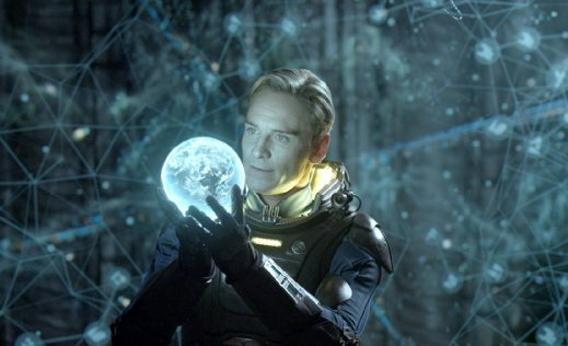 I was at a birthday party the other day and a discussion about PROMETHEUS inevitably found its way into the merriment. Regardless of what I think about it, you think about it or your friends and enemies think about the film, what came ultimately came up was the expectation level for this film, and how it basically failed to be an “important” film (unless controversy and divisive reactions counts for importance these days). Even in the eyes of someone who was entertained by it (as I was, and perhaps because I hadn’t seen any trailers and had limited expectations), it failed to be “important” and resonate.
PROMETHEUS has its fair share of problems, mainly an identity struggle – did it want to be 2001: A SPACE ODYESSY or did it want to be James Cameron’s ALIENS? Two so-called important pieces of cinema from an era when cinema as actually important. And there was some character issues (I hope that the Blu-ray doesn’t come out with all this character shit that had to be ripped out for bullshit time considerations… it would be an ironic revisiting for Ridley Scott, if that was the case, as the director’s cut of the first film had the same thing happen, and it happened on BLADE RUNNER and LEGEND, which pretty much pushed Scott out of the sci-fi/fantasy genre for roughly three decades).
However, cinema is not important anymore. By and large cinema has been completely hijacked from two polarizing camps – those who are in it to make the big time bucks, and those that want to show that personal, idiosyncratic stories can still be told through the cinematic platform.
One of the things that made cinema important was the mythology in the creation of a film – the struggle between an expansive vision seeking to codify an aspect of the human condition, the limitations of the medium and the hesitation of the “money” to make sure the investment was at least returned (cinema is, after all, a mass communication platform; small films aren’t made to suffer Kafka’s fate. They are made to infect the audience with an idea). When Stanley Kubrick was making films, his movies turned out to be important because of the myth of Kubrick (even during the 1960s), but also the arduous process he had and the material he selected (never did get a chance to mount NAPOLEON, and from the looks of the Taschen book it might have been a crowning achievement), and his eventual autocratic control over every aspect of the cinematic experience that he wanted to give you. Perhaps, with his death 13 years ago, the importance of cinema died too (his last film was as controversial as everything else that he did, so at least he’d be proud of that).
So if cinema is no longer important (with a capital “I”), then what is it?
Remember when movies had this cultural impact, this cultural stamp in which communities of people all around the globe collectively went to and experienced? Now we watch them piecemeal over a myriad of display platforms that ultimately homogenize and dilute the experience.
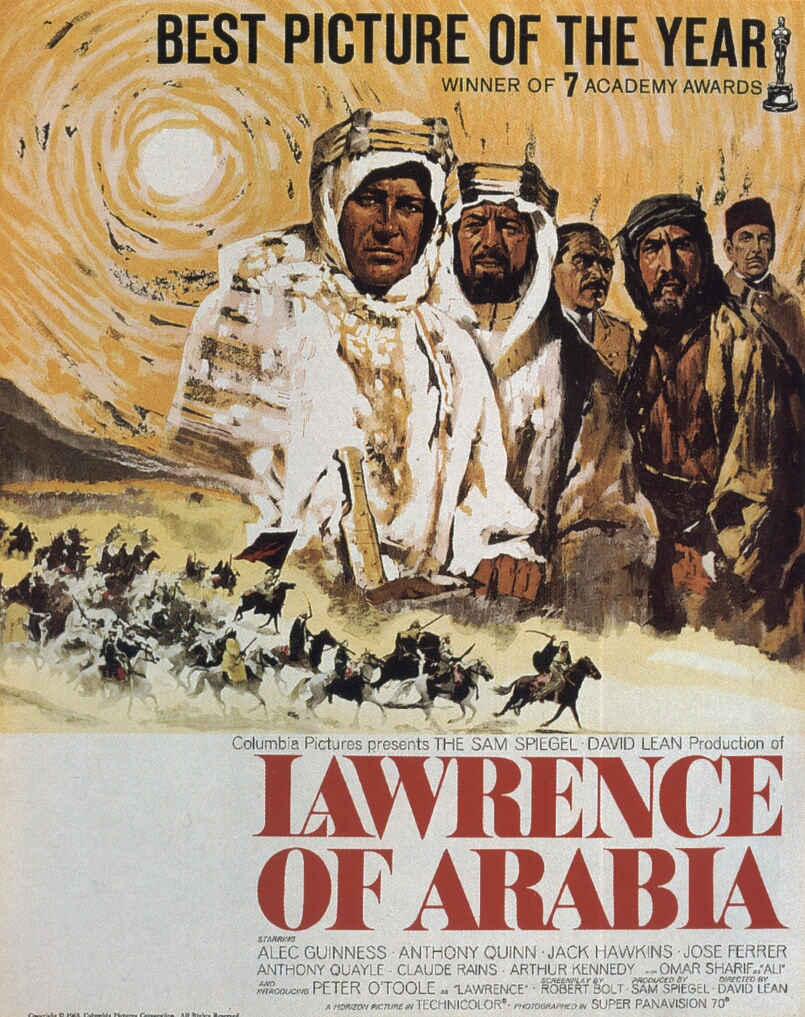 This year marks the 50th anniversary of David Lean’s LAWRENCE OF ARABIA (number one on my list of great films – Top 10, Top 25, Top 50, Top 100… it’s there at the top) and this movie was certainly made “as entertainment” but it was much more than that – and everyone involved in the making of the expansive epic knew it when they were making it. Why do you think screenwriter Robert Bolt took off in the middle of the year-long shoot to re-write chunks of the work AFTER seeing the rushes? And was thrown in jail for his anti-war convictions at the same time? As I’ve said before in my piece on epic cinema, a 70mm film – at that time (and now) – marked the high point in the artistic achievement for the medium. Back then a movie of LAWRENCE’s scope premiered at one or two theaters and then did the roadshow route to get the masses to watch the 217 minute film; this made seeing the film an event (and not just because you had to give up the better part of your day to see the film… although I’m sure that contributed to it).
I think some filmmakers thought digital 3D cinema would bring back the elusive magic, but look at the films that get produced in 3D? Unremarkable in scope and story (by and large), and typically pure popcorn flicks (in terms of being extra disposable). Imagine if LAWRENCE OF ARABIA was, miraculously, coming out today, would it be produced in 3D? Probably not… because of the cost (but it pumped the “Camera” line item on the budget into the stratosphere even then), and it would certainly warrant a true 3D production. We have to be grateful that Columbia wanted to give the “important” filmmaker an opportunity to do something grand (he was just coming off the multiple Oscar-winning BRIDGE ON THE RIVER KWAI), something that would be indelible…. And still entertain! That’s LAWRENCE OF ARABIA. Is it important simply because it is being digital restored/remastered and re-released 50 years later? You tell me.
As to what is cinema (my unanswered question from above)? Hmm… These days movies are primarily diversionary entertainment, practically no different in entertainment value than a good TV drama (or comedy), and yet we, the audience, subconsciously beg for filmmakers to give us a film that IS important, that postulates larger ideas that we can chew over with our friends, colleagues and new acquaintances at cocktail parties or dinners. This is what we want from the Christopher Nolans and Quinten Tarantinos of the world… but early word on THE DARK KNIGHT RISES* is that it’s the weakest entry of the trilogy (more on that in a second) and DJANGO UNCHAINED is too hyped for it to ultimately be amazing (and Tarantino is quite a polarizing filmmaker).
I saw a movie the other day, Andrew Niccol’s IN TIME, seriously flawed in concept, but utterly delicious in what it had to say (that’s what I love about sci-fi, it’s supposed to make you think, because it can get away with provoking) about the human condition. Isn’t that one of the obligations of art?
It seems to me that the only films that get a rise out of people are the ones that people argue vehemently about – I hated it, you loved it (or vice versa… see Tarantino’s oeuvre); there’s rarely a mutually-praised film that gets everyone (or at least a vast majority) in your circle of face-to-face friends, on Facebook updates or rampaging through your Twitter feed rejoicing about. I hear more about “Mad Men” and “Breaking Bad” than I do about any film… even the so-called award-worthy cinema that comes out in the last two months of the year (jammed together in their release slate, so one doesn’t really have time to digest any one of them).
Granted, I can see a lot more stimulating cinema on home video (like Olivier Assayas’ CARLOS… it’s about five hours long though), but, you see, that’s the whole point – cinema, in all its glory, is at its more important when it’s displayed on a big ass screen. Me watching Carlos over a couple of nights on my Kindle Fire just doesn’t do it justice. I think CARLOS played in one theater in LA for a week, and it was unsung during that time.
Okay, so back to PROMETHEUS, which happened to be film entry number 5 (or 7, if you include the two Aliens versus Predator films) in a franchise that was birthed when Hollywood was still in the flux of the complete collapse of the infamous Studio System/old guard and the rise of the multinational corporation that happened to own a film studio in order to dictate culture on a broad scale. As inventive and imaginative as the filmmakers were in gestating and then crafting that film, so much story potential has been already exhausted in the previous 10 to 14 hours of movie story that PROMETHEUS can’t EVER be an important film – it’s part of a franchise, and almost by definition the latest filmmakers have to be curators of the franchise… which means no risks.
Important films take risks or are just risky endeavors in themselves (like Andrei Tarkovsky’s films). The filmmakers take risks when shooting and editing, and they hope the distributor takes a risk selling their film to the masses. When a film is barred from taking a risk – in fear of not hitting the marketing department’s dictated quadrants, and therefore not covering the negative cost – how can it possibly be important? Oh, I know — that same marketing department, skilled as they are, can get you to believe such and such film actually is important… whether it is or isn’t, only time will tell, and time (in the pop culture sense), these days, eats cinema with a voracious appetite.
SIDE BAR: Quick thought on PROMETHEUS – the ship that the Earth Party found was NOT the ship from Scott’s original 1979 ALIEN… in that there was a fossilized “Engineer” with an exploded chest (no doubt from an alien) in the ship’s control chair; so the second Noomi Rapace unleashed the “sentient bio-weapon” on the Engineer, PROMETHEUS was cutting completely new storytelling cloth and it is only tangentially part of the ALIEN universe; this I dug, but was it lost to a lot of the audience?
Although cinema does still have the ability to make incredibly evocative images, as this Video Essay that appeared on Flavorwire recently demonstrates, these films and the respective filmmakers mainly produced work prior to the death of Stanley Kubrick.
Cinema has a unique place of being art and commerce simultaneously. Maybe it’s the ideas that go into cinema that are all together flaccid, because of the need to market a known (or suspected to be known) quantity supersedes, and this washes out risky behavior and intellectually stimulating ideas… I can’t imagine an early-60s Jean-Luc Godard film coming out now and getting released in the theater… his films were as much as about his ideas and his skewering of Hollywood and the West (although with some homages) than anything else… and those ideas don’t “sell” any more, do they?
*Note this article was written prior to the release of THE DARK KNIGHT RISES.
Reg
July 24, 2012 - 4:14 pm
Good stuff, Chris.
Props.