Reviving Classics, by Christopher Derrick – Sympathy for the Devil #31 | @MDWorld
March 25, 2013 Chris Derrick 0 Comments
 One of my earliest memories of a classic film was the 1988 restoration/re-release of David Lean’s incomparable epic — LAWRENCE OF ARABIA. A team led by Steve Spielberg pu up the funds to pay for this film’s “remastering” – and it was a digital remaster, just an honest to goodness photochemical remaster of the magnificent 70mm camera negative.
Having never seen the film during its original theatrical run (which was a three hour film) or seen the cut versions or any home video/TV versions, I had no idea what to expect — but as the film’s score began — which signalled the coming of the movie soon (something that was done during those days when movies were epics, and their release were monumental cultural events, not judged as whether or not you’ll peep it on DVD or Netflix) and the lights went down, I experienced something I’ve only had the remarkable honor of witnessing twice more in my extensive cinema going life.
John Barry’s rousing and emotional score for LAWRENCE sucked me, and to this day it’s my favorite film of all time, and I’ve seen it six times all in the theater (one time was with Spielberg’s personal print at the Universal lot, but that’s another story) and never any home video presentation. I feel it’s power and glory would be lost through a non-70mm presentation.
So over the years, I was preternaturally interested in film restorations; the next one I saw was Stanley Kubrick’s SPARTACUS. It was the 30th anniversary release, where Anthony Hopkins dubbed in Lawrence Olivier’s voice in the famous snails in the bathhouse scene that was excided back in 1960 for censorship reasons and was finally being shown to the public. That was good experience, but not magical.
The next magical restoration was in the summer of 1992, the 40th anniversary of Orson Welles’ OTHELLO (this links to the full movie)… and this was truly magical, seeing this lost film is the primary reason I became a filmmaker (as to why, again, that’s another story). There was more to this film’s story than age and neglect, it was a “lost” film… the grand design of Welles’ masterpiece was only pristine in the minds of those who saw it premiere — and win — at the 1952 Cannes Film Festival. It was butched upon release in the states, and the original elements went missing…
Many times films are butchered for commercial reason, sometimes for vindictive reasons, or some films cause an uproar upon premiere and must be re-cut to satisfy… whoever (this is probably considered a commercial reason). Okay, so when films started to have a second life in the TV and home video market, sadly, the only objective was to get an “acceptable” version out for audiences to see the films. In many cases, there wasn’t an attempt to render the film in as close as form as the filmmakers intended.
As a budding cinephile, cineaste, cine-snob, I was there when the Criterion Collection first emerged and started restoring classic European cinema and putting it out on laser disc. Many times the wonderful people at CC would strike new fine-grain prints from the original camera negatives to make the video masters that they used for the at-the-time high video quality of the laser disc.
This is when films likes TALES OF HOFFMAN and THE RED SHOES (1948) were made available in the original edit, and they opened my eyes what could done with color, on a psychological level, that most films and filmmakers either forgot about, never learned or chose not to incorporate in the vast majority of post-JAWS cinema.
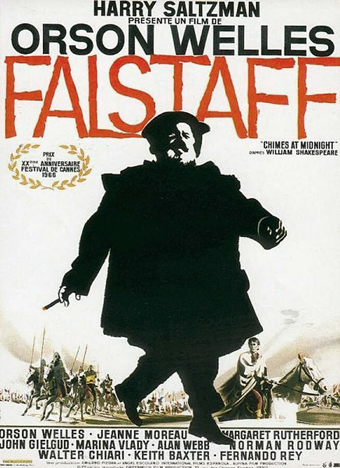
I loved looking at the Criterion release schedule, and hoping that some of the oft-talked European art house films would make it out on laser. Many did, many did not (there still isn’t a definitive version of Welles’ twilight masterpiece CHIMES AT MIDNIGHT. Even in shoddy, faded 16mm scanned video version that I’ve see, this film is outstanding), but the fact that this company was raising funds to do restorations of films that they ultimately didn’t own the rights to was always impressive to me (and to any filmmaker who’s worth their salt).
Reading about Kubrick and Welles’ process turned me on to a French filmmaker named Max Ophuls, who both of those filmmakers cherished for his use of extensive, 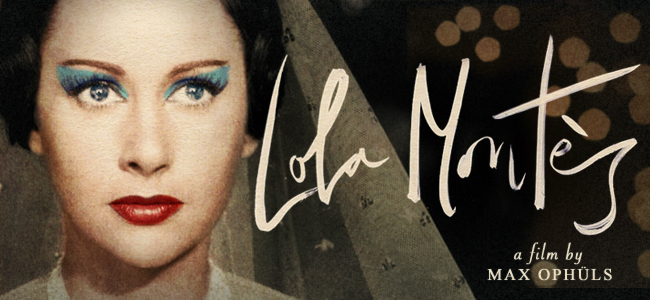 complex and lengthy tracking shots… a visual flourish that I have a soft spot for. His films present Romanticism in an intriguing way, and I sought some of the out over the years, but his grand masterpiece LOLA MONTES (1955)… either eluded me as I refused to the see the butchered version (more on that in a second). However, over Valentine’s Day weekend Hulu granted free access all the Criterion Collection films that it offers through the Hulu+ subscription service… and the recently restored version of LOLA MONTES was available. It was the first film in my queue.
Much has been said about LOLA MONTES; its flamboyant use of garish color, its time displacement narrative, its controversial 1955 Paris premiere and the part its the poor public and critical reception (and subsequent forced re-cutting) played in Ophuls’ death. A sense of the unexpected washed over me, as I watched the film intently examining the visual style, the attention to detail, the narrative construction (which I could not for the life of me see how the time-displaced narrative could have been reworked and still be effective) and, of course, the glorious tracking shots (notably two shots that vertically traverse multiple floors in an opera house – beat that Fincher, Scorsese and de Palma)
As a film made in 1955, the explosive, if not harsh and garish, use of colored lighting to accentuate story points and emotional beats had to be groundbreaking, because it is still breathtaking now. I would say only Powell & Pressburger’s THE RED SHOES achieved a similar operatic approach (it’s no mere coincidence that both films are about tortured stage performers). LOLA MONTES ranks up there with Bob Fosse’s ALL THAT JAZZ as one of key films about the destructive effects a career in the arts can have on an individual; driven to extremes to express the tumultuous emotions that can only be exorcised through artist output.
On the most basic of levels, when films are restored were finally given a chance to see an artist’s original intentions and what emotional ideas they wanted to convey unadulterated by the demands of commerce.
More recently a troubled film finally saw the light of day; MARGARET written and directed by Kenneth Lonergan and starring Anna Paquin. There was interesting article in the NYTimes that details the troubled post-production fight of this film. Lonergan’s struggle echoes many of the fights that Welles and Sam Peckinpah went through to bring their great films to the public (if you haven’t seen the original and then restored version of Peckinpah’s PAT GARRETT AND BILLY THE KID, then you’re missing out on seeing how travesty can be posthumously averted). A few weeks ago, MARGARET was on HBO (after the briefest of brief theatrical releases last Fall), and it’s certainly a curio; even though Martin Scorsese helped with this cut, it still seems a bit disjointed in areas, but it held my interest for the well over 2 hour running time. Paquin gives a compelling and impressive performance; I believe this was pre “True Blood” and you can tell that it led to some of the bold choices she has made in that series.
 That’s another interesting thing about restored films, you get to see a snapshot of a performance that has been, for all practical purposes, missing from an actor/actress’ resume.
Francois Truffaut was famous for saying that a director is lucky if he can get 70% of what he sets out to get, so with butchered films the director must settle on perhaps 33% or less of what he (or she) originally intended. It’s too bad that the home video market is basically a pass-thru market segment now with commensurately reduced revenue streams, so the ability to make a restoration a financially worthwhile enterprise is basically dead. The restoration of LOLA MONTES was cobbled together through a few European ministries of culture (German’s Goethe Institute has done a great job in ponying up funds for the restoration of Rainer Werner Fassbinder’s work), but that doesn’t bode well for many films that are tied up in endless litigation over the distribution rights.
I doubt that we’ll see too many more restorations of classic films — even though the technology to preserve them and present them in the most pristine formats possible is available today — because we’re heading to a purely Internet-based streaming distribution of non-blockbuster films… and any film that needs to restored certainly doesn’t qualify for blockbuster status. Labors of love by people like Kevin Brownlow and Scorsese will revive certains films, but the wealthy heritage is still under assault.