I Can Get It For You Wholesale, by Christopher Derrick – Sympathy for the Devil #33 | @MDWorld
April 17, 2013 Chris Derrick 1 Comment
 Three distribution models recently come on the scene that are essentially no-brainers and should have been employed at least three if not five years ago. They are all digital distribution models that require an internet connection, use technology that the web has mastered a long time ago and provide the entertainment audience with exciting ways to watch TV, read a comic or read a novel.
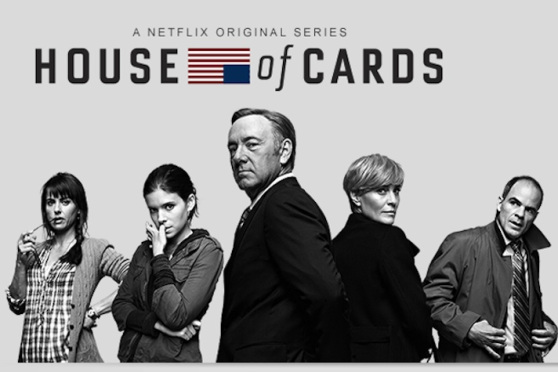
Netflix’s House of Cards, Tor Book’s “Human Division” by John Scalzi and Panel Syndicate’s THE PRIVATE EYE by Brian K. Vaughn and Marcos each are new creative works that are harnessing the changing consumer behavior models for narrative entertainment.
Netflix, the now-dominate form of a la carte home entertainment viewing for movies and TV, decided that creating their own content would earn it more and more subscribers than just aggregating other people’s content. So in 2011, they brokered a deal with filmmaker David Fincher and Oscar-winning actor Kevin Spacey to remake the BBC’s sublime House of Cards. Writer Bill Willimon (THE IDES OF MARCH) was tapped to craft the US version, and Netflix ordered two 12-episode seasons at once.
In February of this year, Netflix debuted House of Cards will all 12 episodes of season one available for immediate viewing – so no waiting for a week to pass to see a new episode. This distribution model was no doubt geared at the binge TV consumption behavior model that has become a major force since the ubiquitous dispersal of DVRs in the last decade.
House of Cards has a grand and sprawling storyline that is equal parts ALL THE PRESIDENT’S MEN, The West Wing and ABC’s current scorcher Scandal… yet it’s more than all of those because of the deep, intimate storytelling that the series provides – ultimately “not much” happens, but how it happens is throat-grippingly good.
Releasing House of Cards all at once is perhaps an interesting strategy; however, the draw of new subscribers to Netflix after all the heavy marketing could have arguably been leveraged more effectively if Netflix released the series in three acts (4 episodes in each act) over a six-week period (why six weeks? So Netflix could get you for two billing cycles to see the whole series).
Netflix is doing the same distribution model for Eli Roth’s Hemlock Grove series that drops all of its first season episodes on April 19. And perhaps sometime next year, the Wachowski Siblings (along with comic book & TV scribe) J. Michael Straczynski will release Sens8.
I’m sure that Amazon is watching very carefully how successful Netflix is with this model (because they will be launching something similar soon… as they have more money than Netflix and if you throw Amazon Prime in to the mix, you must pay for a whole year upfront, they could rival HBO with a per episode spend).
We have to assume that all the other pay-cable channels (HBO, Showtime, Starz, Cinemax) are analyzing the House of Cards-model (as it will surely be known) too. This definitely upsets the apple cart, but it probably also will afford these networks to expand their reach, as a lot of people would love to be able to ONLY subscribe to HBO and not get all the other shit that’s on TV (Real Housewives of Atlanta and Honey Boo Boo immediately come to mind).
Last summer, genre book publisher Tor announced that sci-fi writer John Scalzi’s next novel in the Old Mans War universe would be released in a serialized form. Each week for ten or 12 weeks, starting this past January, a new chapter of “The Human Division” e-book was made available for download via Tor’s links to Amazon, Barnes & Nobles and other major e-book e-tailers. 
This isn’t a new form of distribution of prose stories, as Charles Dickens took this to halcyon levels in the 19th century for the vast majority of the masterwork novels. Arthur Conan Doyle did the same with the Sherlock Holmes stories, but this form faded for most works of fiction as the cost to print paperbacks dropped dramatically and our culture recognized the value of owning books and having a personal library (but this is sort of coming to an end now, and will vanish in the coming decades for the vast majority of people who do read… those who don’t read books could careless).
I recently downloaded the first installment– The B-Team – and was pleasantly impressed; I have no previous experience with Scalzi as a writer or know anything about the Old Mans War universe, but like any highly skilled writer of serialized material, Scalzi draws you in and doles out what you need to know to be functional in his universe and enjoy the unfolding story. You’re not bogged down by endless details that can plague a project like this or any return adventure in a complex, fully developed world (think about reading an X-Men comic book these days; they’re almost devoid of enjoyment because you have to deep knowledge of the last decade of convoluted and stunted material… such is what happens when you cripple you assets by only treating the popular stuff with respect and shitting on the second tier characters that are just as fascinating, just nowhere near as popular).
Scalzi establishes a confederation on the brink of collapse, and this kind of space opera usually isn’t told from the POV of the diplomatic core, which this is, and it reads briskly while opening up all sorts of questions that you’ll eagerly anticipate finding the answer to… in the next installment.
“The Human Division” costs $0.99 for each “episode” and downloads directly to your Kindle or iPad or Nook (I love Whispersync); it makes for great reading and adds a sense of anticipation toward experiencing a type of storytelling that has typically been reserved to the long format trilogies (or longer) that have gained popularity since the early 1970s (although Tolkien’s work does predate, one could argue that trilogies “took off” in the ’70s).
The last “new” distribution model is how Panel Syndicate, which is a digital-only comic book publishing entity (it’s not yet a publishing company in the traditional sense, but it could be), is releasing THE PRIVATE EYE by fan favorite writer Brian K. Vaughm (TV’s “Lost” and comics’ EX MACHINA) and artist Marcos Martin (Daredevil, Doctor Strange: The Oath, among other things).
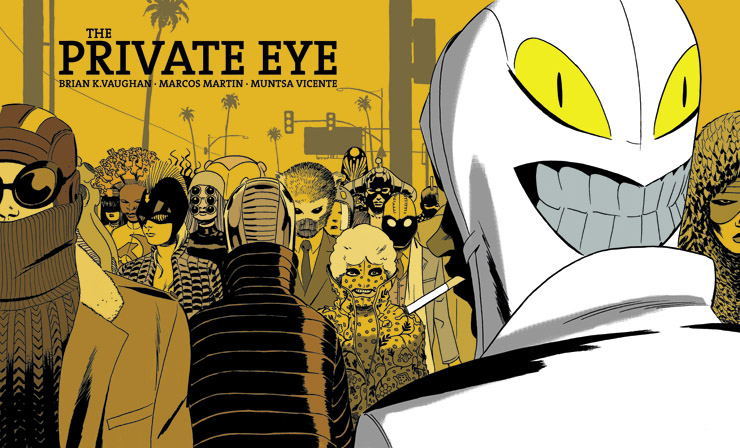
With THE PRIVATE EYE, a sci-fi social commentary pulp noir, Brian and Marcos are empowering you, the consumer, by letting you decide how much you want to pay for the digital comic (which is DRM-free, btw). It could be free (if you’re a bastard) or it could be as cheap as $0.99 (like most e-books are) or you could pay something close to what you’d pay for an actual comic book (I paid $2.50, which is a little less than the cover price for Vaughn’s SAGA; one of my favorite monthly comics at the moment, of which I’d pay up to $4.50 for).
You can pay for (please) and download the CBR, PDF or CBZ file of THE PRIVATE EYE for reading on your iPad, Kindle or CBR-reader client here. Only the first issue of this 32-page comic is available at the moment, and the narrative is an interesting set-up for what promises to be a 10 issue story. What’s really cool about it, is that even thought it’s 32 pages, the pages are designed to be dual-page spreads (so it’s really only 16 pages, but that’s quibbling, because Vaughn and Martin tell so much story and build a fascinating and original world in those “16” pages).
Panel Syndicate and THE PRIVATE EYE embraces a model that comics publishers could have/should have been doing for at least the last four years for titles that were on the brink, but had hardcore fans or new things that they wanted to try with less of a commitment from creative teams with high Q-ratings. And yet for some reason DC, Marvel, Image and Dark Horse didn’t do this. I don’t know if they’d be driving themselves out of business or not if they experimented with this model.
The one thing about all of three of these distribution models is that they capitalize on the popularity and fan-base of the individual creators.
It would be too hard for Netflix to launch a new series from a creator who only had a name in Hollywood and not in the broader culture (Fincher, Roth and the Wachowski Siblings have transcendent appeal and ardent, ardent fans), just as Tor wouldn’t take a chance with a new writer or even a midlist writer with a serialized release pattern. And there are countless web-based comics (most of them bad) that are given away for free in hopes of securing an audience that Brian K. Vaughn already had from his crossover, mega smash Y: THE LAST MAN.
Most narrative works best when there is a great deal of anticipation to how the story unfolds, and that’s one of the things that is effectively removed with binge viewing (and its comic book equivalent, the trade paperback); these are the viewing habits that we have been accustomed to since the dawn of TV and the using of the printing press for commercial purposes.
It all sort of comes back to when we were children and our parents (or other elders) told us bedtime stories – they usually made them last by employing cliffhanger techniques (that’s essentially what chapters are in books) which are always good stopping points for the night as Mr. Sandman beckons, and they would be picked up the next night (or whatever interval).
However, in today’s age when is bedtime for adults? When is bedtimes for kids? Is the “campfire” where stories are told truly any different or better if the “flame” lasts as long as you can stand watching a TV screen in a given sitting? And is massive consumption of narrative entertainment a bad (or good) thing for the culture at large? And media in general?
I’m rarely comfortable with reading comics in the trade format, and I like watching TV in single (or dual) episode blocks, and books… well, I read at least 3 or 4 books at once, and that gives me the anticipation break in any event.
And yet, I do find these new models liberating and invigorating because they’re embracing the digital world with variations on tried-n-true methods that the audience is familiar with (think about Tor is releasing Scalzi’s The Human Division like it’s a 12-episode TV series – and it reads with that kind of pacing too) and that monetize well (I can only assume this because I don’t have access to revenue numbers or have seen in reports on that matter).
There’s always more (like updates about our graphic novel THE DARK ARTS) at www.shadowboxercinema.net or follow me on Twitter.