The Shape of Things to Come, by Chris Derrick – Sympathy for the Devil #38 | @MDWorld
August 6, 2013 Chris Derrick 8 Comments
 Filmmaker Paul Schrader (writer of TAXI DRIVER, writer/director of AMERICAN GIGOLO) just released a new film (directed by him, written by Brett Easton Ellis of AMERICAN PSYCHO and LESS THAN ZERO fame) called THE CANYONS, starring candidate for a Day of the Locust remake Lindsay Lohan and porn actor James Deen; it’s about a Hollywood couple (a producer & an actress) who can’t stand the movies anymore (like they’re something you can grow out of) but their lives are stuck in the vicious and duplicitous Hollywood culture… This film is sort of a treatise on how the concept of “movie culture” as we know it is a shell of its former self (and is on its deathbed). The trailer opens with shots of vacant and abandoned multiplexes… which is coming faster than people realize… coupled with Lindsay Lohan’s character asserting that movies, in the theatre, are just dead.
What’s also being indicted in THE CANYONS is that the disproportionate number of fame-seekers who fill up the middle and lower social ranks and waste everyone’s time in the so-called Hollywood scene; people who don’t have a passionate desire to make films, to create the intellectual and emotional nexus that a film can be, but to use a successful movie as a platform for all sorts of other pop culture-related commercialized bullshit (book deal, clothing line, perfumes, shoes, energy drink, that kind of vapid conspicuous consumption consumerism shit).
Your personal brand is designed, defined and screamed through a megaphone through a successful movie. And once you’re brand is defined and you’ve bartered your soul for a house in the Hollywood Hills (or more specifically one of the canyons — Benedict, Laurel, Coldwater) intricately designed by that master architect Mulciber, the life you’ve yearned for is one constructed by cocaine and alcohol, but you don’t see it that way. You see it as, I’ve reached the pinnacle of what a decadent and rapidly declining culture can offer; might as well ride out the whirlwind in style.
NATHANIEL WEST’S GRIN TURNS INTO A RICTUS
Hollywood has always drawn people far and wide in search of stardom, but these days it seems that Pink of Your Ass Fame (as in bending over, pulling back your butt cheeks and unapologetically and unflinchingly showing the whole world the pink of your asshole) is the huge draw, and then hoping & praying & swallowing that a fortune comes with it — a reality TV star is only in it for the merchandising deal that they’re angling to strike if they win the “show’ lottery of being catapulted into the pop culture consciousness by showing the pink of their ass on TV, the internet and in tweets.
It’s sad that people strive for that type of raw and unsightly exhibitionist fame, but that’s how much our culture has pivoted in the last 15 or so years. Fame from TV, the internet and maybe the multiplex is the new Horatio Alger lottery ticket. When I was in high school there was a class that everyone wanted to take called “Film As Art”; it was just like taking a class on the Flemish Renaissance painters, and examination of how film combined all the other art forms to create its own art form. I doubt that class exists anymore and if it does, I’d bet it’s not dissecting films like A CLOCKWORK ORANGE or SINGIN’ IN THE RAIN or CITIZEN KANE… those “antiques” mean very little to today’s cinema-watching audience.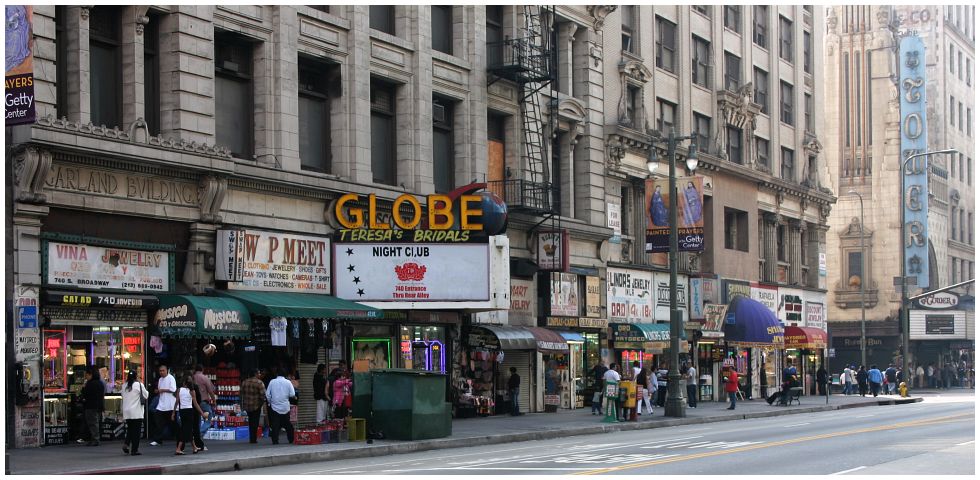
WHAT IS A MOVIE THESE DAYS?
Schrader also postulated in an recent interview about THE CANYONS on what’s the difference between a 5-minute video on Vimeo or the 13-hours of story during a season of “The Killing”? “Nothing,” he says, “They’re both movies…” in the sense that a “movie” these days is a catch-all phrase for any video-recored entertainment – live action or animation. Schrader goes on to say that the 2-hour film is under assault. I wholly agree with him.
Consider that a season of “The Killing” probably costs about $70m… and how much “cinema” can you buy with $70m? Not a lot if you go through the Hollywood production machine and want the production values and equivalent actors of a prime time TV show, and that movie probably won’t be that good, because the economic concerns (which are arguably the same, although the revenue streams are entirely different) for the “cinema” product would necessitate that the storyline has to super audience-friendly, appealing as many people as possible. Whereas “The Killing” (and we can substitute any critically-acclaimed cable drama) is aiming for a niche audience, that over the length of season would be about 2 million people watching watching, adding to about 30 million views. If 30 million people watch a film, it’s one of the biggest hits of year, if not landing a spot on the top box office champs of all time list.
The splurge of TV channels and YouTube channels and Instagram video channels has splintered (and continues to splinter) of the mass audience, so niche programming is where it’s at, because as long as you consistently deliver challenging “movies” — in 5-minute increments or 40-minute increments — then you’ll gain the loyal audience you want, which it turn brings the ad dollars — and apparently that is the ONLY thing that matters.
Ad dollars. Ad dollars… and more Ad dollars.
AD DOLLARS, NOT THE CLASH, ARE THE ONLY THING THAT MATTERS
Nielsen recently did a poll on 18- 25 year olds viewing habits during Prime Time TV hours, in which 50% of those polled were using Facebook during that 3-hour block… more eyeballs where on Facebook than any of the 4 broadcast networks. Which has now given speculation that Facebook will run 15-seconds at a cost of $2.5m for a 24-hour bloc. How much do you want to bet that this becomes part of Facebook’s ToS — all users have to allow a certain amount of commercials to run on their feed during their peak usage hours (because Facebook most certainly knows when you engage with it the most).
NOSTALGIA? F*CK, NOSTALGIA
 I mentioned in my last post that Lucas and Spielberg anticipated that “cinema” as we know it is going to be shunted into an exhibition spaces much like Broadway theatre… this is entirely possible. Sad, but entirely possible to see the church’s of the 20th century’s religion fall derelict and into disrepair. I was just in downtown Los Angeles taking art deco photos in the Historic Core, which is anchored by Broadway. On Broadway between 6th and 9th there are seven movie theatres — The Tower, The Orpheum, The Rialto, The Standard, The Globe, The Palace and The Los Angeles — all are defunct; shells of their former selves… is this the shape of things to come for the Cinemarama Dome? Grauman’s Chinese Theatre (which is now actually owned by a Chinese film exhibition company). The funny thing is that old movie palaces can be repurposed for other commercial uses (they’re usually in prime real estate locations), the same can’t be same for the 24-screen multiplex that has been abandoned and left to rot out off of Route 23, where there used to be a farmer’s field, now just a weed-infected parking lot.
A few months back on Kickstarter there was a really cool photo project that was going to document the last of the Drive-Ins… this was fascinating to me (and I missed donating, ‘cause I want a copy of that book; now I’ll probably go shoot my own photos and make my own book), because what is the value of a Drive-In these days? In the past 30 years? What did Drive-Ins say about communal viewing experiences? About social rites of passage? I mean the way some people tell it, the Drive-In was the place to get to Second Base with a chick during one’s teens and early twenties. Now that hooking up is some much easier, why even go? Just to get out of the house?
Although, what I don’t know (and I’m very much interested in learning about) is how the exhibition industry is faring in Europe, China and India? There’s been so much growth in theatre screens in China, it will probably eclipses the rest of the world combined by the time the decade is out (considering that the majority multiplexes will shut their doors during the coming decade) — not that it will mean anything to American filmmakers because of 12 film quota that China has on foreign films (which begs the point why do so many Hollywood studios bend over when the Chinese lodge complaints about how China and the Chinese are depicted).
And Europeans don’t view films as a crass commercial enterprise the way it is in the US (hence the reason why the governments provide financing for pretty much any kind of picture, as long as it has some cultural value… which is a dubious criteria in any event, so as long as its not a Eli Roth style bit of splatter/torture porn, you’re probably going to get your money).
We’re in the throes of Present Shock at the moment, so pining for nostalgia is a wasted effort on every level. There’s a Criterion Collection DVD called Things To Come, it’s a film from the late 30s/early 40s and its predictions of how the future will be aren’t too outre (the industrial design is off, but the concepts aren’t)… but it didn’t predict the collapse of narrative entertainment on mass communal level…
George Haberberger
August 6, 2013 - 8:03 am
I see a lot of movies. So for this year my wife and I have seen A Good Day to Die Hard, 42, Now You See Me, Star Trek Into Darkness, Iron Man 3, Man of Steel, The Lone Ranger, The Wolverine, R.I.P.D. and RED 2. Maybe most of those are “crass commercial enterprises”, but I have preferences. Hangover 3 and Grown-Ups 2 are not on the list and neither were any of their predecessors. Incidentally, I liked The Lone Ranger a lot more than many of the ones on this list.
Last year we saw 7 of movies nominated for best picture: Argo, Lincoln, Les Misérables, Life of Pi, Silver Linings Playbook and Zero Dark Thirty. We also saw Flight that Denzel Washington was nominated for.
“And Europeans don’t view films as a crass commercial enterprise the way it is in the US (hence the reason why the governments provide financing for pretty much any kind of picture, as long as it has some cultural value…”
The last thing I want is the government determining what has cultural value. Well, maybe the THE last, but it is pretty far down on the list.
Chris Derrick
August 6, 2013 - 6:11 pm
Hey George,
I won’t expect you to have preferences that fall in line with mine or anyone else’s for that matter, but I did notice that you didn’t mention any foreign films or independent American cinema that you might have seen, any reason for avoiding that more challenging cinema?
Crass commercial enterprises, when it comes to films, are ones that are more concerned with selling merchandise and getting kids to come to theme parks than doing anything else. And these films are made at the expense of such films as ARGO, LIFE OF PI, FLIGHT, LINCOLN — so much so they’re driving those types of films out of the marketplace.
Cultural value is a highly vague term (on purpose), and smart European filmmakers are able to effectively present their case and obtain funding WITHOUT the same stringent economic demands as a Hollywood studio film that’s aimed at the mass audience.
Let’s take a look; if you saw (& liked) a film like TAKEN (which was partially funded by the French government) or the horror film HIGH TENSION (2003) or one of my favorites in the past 5 years 2010’s POINT BLANK (which is on Netflix, please go see it and let me know what you think) then you can see that wide variety of films fall under the France’s “cultural value” umbrella.
Do you watch any shows from the BBC? All of them receive money from the UK government for “cultural relevance.” Or did you see and enjoy SLUMDOG MILLIONAIRE? It received partial funding from the UK government, and considering its smash commercial success and cultural embrace, how can we argue the UK government made a bad decision.
The United States Government still (barely) funds the National Endowment for the Arts, this provides financial backing for a wide range of artist who otherwise wouldn’t be able or would have an exceedingly difficult time creating their art.
Incidentally, David O. Russell, who directed SILVER LININGS PLAYBOOK got his start through NEA funding (his debut was the last feature film funded, before the GOP forced a rules change).
It is true that American mistrust in the government is exceedingly high, so the idea of the the Bush or Obama Administration determining cultural value is probably distasteful to a lot of people.
However, the government makes a lot of “cultural value” decisions — funding for local and state parks, anything on the Library of Congress national heritage list (including that list of films), and I think the American Film Institute receives government funding (and its graduates make all types of films that we love and hate).
Something else to remember, “cultural value” also means things that continue to propagate the dominate cultural norms and perception.
Rene
August 6, 2013 - 7:01 pm
I am a huge fan of cinema, and I try to be very varied in what I watch. I watch American movies, European movies, “commercial” movies, art movies, new movies, old movies, I watch pretty much everything. As long as it is interesting. I’m too restless to watch the same sort of movie every time.
And you know, I’m very skeptical about predictions of doom and gloom for cinema or any other art form. Because the human mind is very prone to a trick of perspective: when we consider the present, we often drown in the bad and the mediocre (particularly when we hit middle age and after). When we consider the past, we only remember the good stuff. But those people actually living in that past fell prey to this same trick of perspective.
That is why Golden Ages are usually only recognized after the fact. Sturgeon’s Law always applies, 90% of everything is always bad, but when we’re living through it, we focus on the 90%, and when we look back at an earlier age, we only see the 10% of good stuff.
A related phenomenum is that many of the greats are not fully recognized in their own time. Orson Welles, Stanley Kubrick, Alfred Hitchcock, and David Lean are only a few examples of geniuses that only received proper accolades years after the fact. A CLOCKWORK ORANGE and CITIZEN KANE had a lot of detractors when they were first released.
So, who’s to say that people a few decades from now won’t look back at Darren Aronofsky, Christopher Nolan, Paul Thomas Anderson, Wes Anderson, Alexander Payne, and others, and consider it a “Golden Age”?
George Haberberger
August 7, 2013 - 2:12 pm
When my wife and I first started dating we saw “The Gods Must be Crazy.” She married my anyway.
”I did notice that you didn’t mention any foreign films or independent American cinema that you might have seen, any reason for avoiding that more challenging cinema?”
Do I need a reason? I see what I want. Cinema should entertain first. If it promotes deeper thought and introspection, great, but that’s not why people go to the movies and not that’s why the movie industry thrived. We saw R.I.P.D. because my wife likes Jeff Bridges and Kevin Bacon who were both in that movie. We didn’t like it. It is derivative of Ghostbusters. I like Clint Eastwood’s movies. Really liked Gran Torino and enjoyed Trouble With the Curve even though the ending was obvious after the first half hour. Sometimes you want movies to go where you expect them to.
Much has been written about the subtext of Shakespeare’s plays but he was writing for the masses. Did the theater-goer in Elizabethan England understand the significance of whether the dagger Macbeth sees, (“Is this a dagger I see before me? Handle toward my hand.”) is visible to only him or also to the audience? They were there for the dead bodies in the last act.
I see a lot of live theater. Not as much as movies obviously because of the cost. Saw “Cat on a Hot Tin Roof” and “Breakfast at Tiffanys” this year in NYC. Saw Glengarry Glen Ross last year. A few years ago in New York we saw a great play by Mark St. Germaine called Freud’s Last Session. It’s coming to St. Louis in November and we’ll see it again.
”Do you watch any shows from the BBC?”
Does Graham Norton count? I have seen an episode of Copper.
I did not know that “Taken” was partially financed by the French government. We saw that and the sequel. My wife also likes Liam Neeson ever since Schindler’s List. After Taken 2 I heard a joke that the main cause of death of Armenian men between the ages of 18 and 40 is Liam Neeson.
”The United States Government still (barely) funds the National Endowment for the Arts, this provides financial backing for a wide range of artists who otherwise wouldn’t be able or would have an exceedingly difficult time creating their art.’
Whenever I think of the National Endowment for the Arts, I think of “Piss Christ.” The NEA gave Serrano $5,000 for something that is essentially all concept and displays no artistic talent. This is something I believe about a lot of modern art. The idea is everything because the execution is simple. I visited the new wing at the St. Louis Art Museum recently. Yoko Ono had her Wishing Tree exhibit there. Visitors are supposed to write down a wish on slip of paper and hang it on a Japanese maple tree. Brilliant! There was also an exhibition by Dan Flavin called “Fluorescent Lights”. It is a fluorescent light fixture mounted in a corner. The explanation is: “combine traditions of painting and sculpture in architecture with acts of electric light defining space.” Flavin referred to his colored light installations as “proposals” or “situations” rather than sculptures.”
I looked at it and imagined one of those complicated caper movies where a band of art thieves break into a museum in the middle of night, bypassing the alarm system and the night watchman after meticulously timing his rounds. They steal this piece and get away clean. And the next day the museum has to go down to Home Depot and buy another one.
I suspect Dan Flavin couldn’t draw an issue of Batman. Nor could Roy Lichtenstein, whose “image Duplicator” is Jack Kirby’s Magneto. At some point I have to ask, “Who’s kidding whom?” Pretentious movies make me ask the same thing.
Chris
August 9, 2013 - 3:30 pm
Rene — I’m confident that Nolan et al. (and I’ll throw Alfonso Cuaron in the mix too) will be the luminaries of this age of cinema… but if/when theatrical distribution is a thing of the past or a rare thing, as I’m suggesting, they’ll seem like these giants in a playpool.
Cinema should encompass everything under the sun, but when commercial interests put certain films in the corner — which is increasingly the case, due to the costs of advertising — I’m skeptical about what’s to come.
I used to be someone who watched about 70-80 movies a year in the theater, now it’s hard to get me to watch more than 10. Conversely, I watch more TV — it’s that much better; Cinemax’s STRIKE BACK is the best action storytelling going in the last 10 years, period.
Kubrick is a complete anomaly; I love his work, but all most all of it was derided upon initial release. In today’s climate, he wouldn’t be able to make 80% of his films. I believe Lean was respected in his time – you make two Best Picture Oscar winners back-to-back, how are you not feted? Hitchcock is/was the most-well known film director until Spielberg, and he hasn’t been overshadowed by anyone. Yes, it took Truffaut and the guys at Cahiers du Cinema to hail his as an artistic genius (funny how the French has to do that for Hitchcock, Welles and later Spike Lee), but that didn’t elevate his popularity.
George — Of course you don’t need to justify why you see what you see, we all see what we have a penchant for. But if you like action films, a great deal of what action and horror is today derives from what the Japanese and Koreans are doing. Why not see the unadulterated source? So maybe subtitles turn you off?
Also the Korean action films, THE MAN FROM NOWHERE and WAR OF THE ARROWS, smash nearly all the action films I’ve seen from Hollywood, because they don’t use VFX as a crutch for compelling story and/or fresh characters.
In addition, I’m by no means claiming that entertaining films and foreign films are mutually exclusive; the French film I mentioned, POINT BREAK, is maybe the best, seat-of-your-pants, plot-twisting action-chase film that I’ve seen since T2 (and with 1/100th of the VFX) or THE FUGITIVE. And remember LA FEMME NIKITA was co-financed by French government, so the American remake and the two US TV shows are all based.
The NEA can’t be poo-poo’d because it made a few bad decisions; hell, every operation that has people at the helm are liable to do that. Also, not everything the NEA funds is for modern art; PBS, also a semi-govern hand out, creates great shows, but some poor ones too.
US “film culture” is dominated by appealing to the LCD, and does have to be? Can it be completely entertaining by not appealing to the LCD? INCEPTION did, so entertaining and challenging should be part of the same discussion when talking about films… otherwise how do we truly move forward from John Wayne films? We don’t get Eastwood’s Dirty Harry films unless he and Don Siegel wanted to challenge the notion of the boy scout cop, and in turn examine an anti-hero.
George Haberberger
August 10, 2013 - 10:11 am
”…any reason for avoiding more challenging cinema?”
and
“So maybe the subtitles turn you off?”
Maybe I’m being a bit overly sensitive but you have a way of asking questions that seems to imply that I must not want to think too much.
I saw all three of Swedish adaptations of The Girl With the Dragon Tattoo, (back when you could go to Blockbuster and rent them), after I’d read the novels, so no, subtitles aren’t a problem. After we saw the American version, my wife and I agreed the Swedish one was better. We’ll see if the next two measure up although those storylines aren’t as gripping.
otherwise how do we truly move forward from John Wayne films?
Have you seen “The Quiet Man” or “The Searchers”? Not everything needs to be “moved on from.”
Rene
August 10, 2013 - 11:16 am
Chris –
Hitchcock was popular with the public, but not with American critics. If I know my movie history, classics like Psycho and Vertigo weren’t even understood by most American critics at the time.
Likewise, all of David Lean’s work past Lawrence of Arabia was met with a lukewarm reception by the critics.
Learning a bit more about cinema history made me respect critics even less, if that’s possible. I take anything that cultural commentators say with a big grain of salt.
I don’t know if commercial interests have pushed “certain films in the corner” more than they ever did. In the 1980s I remember those same complaints, critics complaining of the blockbuster mentality, the teenager mentality, whatever you wanted to call it, that was ruining cinema…
I heard it all before, pal.
Now, when most critics look back on those 1980s movies, it’s with affection, if not outright adoration and saying stuff like “why remake Nightmare on Elm Street or Total Recall when the originals were already so good?”
So yeah, I’m skeptical. Aren’t you sure that that isn’t personal? Maybe you’re just temporarily burned out on movies, it happens.
George –
The funny thing about John Wayne is that the only two movies of his I’ve watched so far: The Searchers and The Man Who Shot Liberty Valance, were mature, revisionist Westerns.
George Haberberger
August 10, 2013 - 12:12 pm
Rene, I’m embarrassed that I forgot to mention “The Man Who Shot Liberty Valance.” A great movie. “When the legend becomes fact, print the legend.” So true especially today. Maybe I considered more of a Jimmy Stewart movie than a John Wayne movie.