Girl Power – Women as Action Stars, by Christopher Derrick – Sympathy for the Devil #42 | @MDWorld
January 21, 2014 Chris Derrick 1 Comment
 One of the places where comics KICK movies & TV’s ass is the freedom in which its creators can focus stories on strong female characters, characters who can inhabit a male-dominated world of action and adventure… and not be a financial risk; in fact, thrive.
A few months back, I lamented about the subpar female-driven action films in the last decade (remember Aeon Flux? No, not the cartoon on MTV’s Liquid Television, but the movie starring Charlize Theron… Now that could have been/should have been cool as shit and had all the mythology of a robust franchise baked in). Yet, I feel that we’re seeing new groundwork being established for the female action star with Katnis Everdeen in THE HUNGER GAMES trilogy, and perhaps Wonder Woman’s appearance in BATMAN v. SUPERMAN will warrant more financial risk on action/thriller movies with females at the helm.
In 2013, Jennifer Lawrence broke a 40 year streak of a woman starring in a film that dominated the box office race. Granted THE HUNGER GAMES has a rabid fan base from the books, which makes it an outlier in comparison to the male driven action heroes that get spawned from writer’s imaginations… but there are several female heroes from the last 50 years of fiction that could make their mark in the cinema. But you can just imagine that the flops are drudged up super-quick when the notion is proffered in development meetings.
As I said, TV has no bones embracing take-charge females — The CW’s Nikita immediately comes to mind, so does the now-canceled Cinemax show Hunted (you can catch it on CinemaxGo… and you should), but there’s also the fucking excellent Orphan Black on BBC America, and Covert Affairs.
Female action heroes in the comics make for great reading, because they seem emotionally more open than their male counterparts. I recently read ex-CIA case officer Valerie Plame’s first fiction book – “Blowback” – and was impressed by her interior struggle as well as her exterior struggle, which isn’t always the case with the male action hero. The writing was tense, terse and effective… I’m waiting for the next Vanessa Pierson novel (probably need two or three books out before Hollywood taps that character on the shoulder).
Kelly Thompson’s SHE HAS NO HEAD recently documents some of her favorite female heroines of 2013, and this got me thinking. What are the most compelling and consistently well-written female action heroes in the past year?
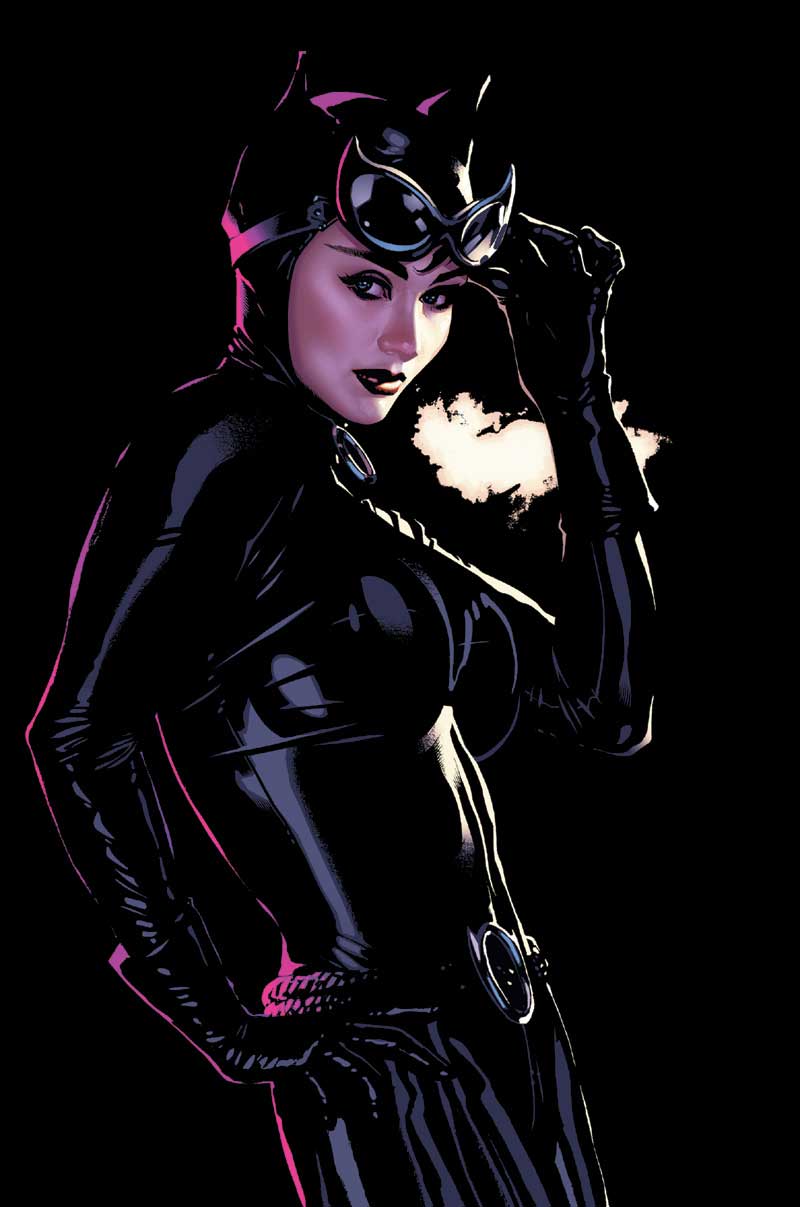
CATWOMAN — Selina Kyle is such a fascinating character (don’t know WHY she didn’t get more screen time in THE DARK KNIGHT RISES ‘cause she was the best part of the movie, and Anne Hathaway played her with charm, sass and power — everything you want in your Catwoman.
Even though Frank Miller has a misogyny cloud hanging over him, the way he interpreted Selina in his seminal BATMAN: YEAR ONE was a legitimate modern take on what drives Selina to be so good at being bad. A lot of people relish the fact that Catwoman is the only serious sexual attraction that Batman has. It adds to the fun; she’s like a drug that he fights to deny.
Miller might not be everyone’s cup of tea (especially in light of his radical conservative rants over the last couple of years), but he has a way of writing tragic women (see Martha Washington and the women of SIN CITY). So it he is too un-PC for you, don’t slip on reading the Ed Brubaker/Darwyn Cooke run with Catwoman; it’s from a while back, but it’s obviously worth reading.
FOREVER CARLYLE — the star in Greg Rucka and Michael Lark’s After-The-Fall comic LAZARUS is quickly rising in my favorite characters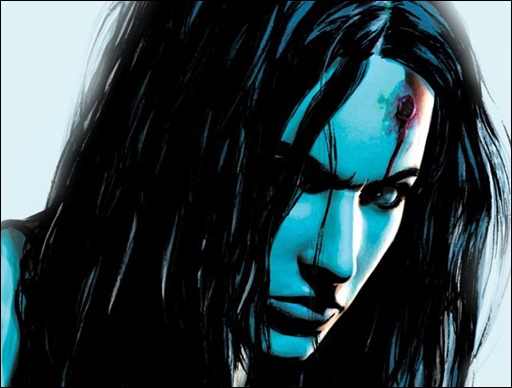 list (not just female characters). Forever or “Ever” as she’s known to her overlord family is attractive — as a character — because while she’s extremely powerful, she’s a pawn and is being emotionally manipulated, and you kinda want to see how she figures out what’s what and then what she’s going to do about it.
What would be interesting would for Rucka to write this book entirely from her POV, so we don’t learn anything unless she learns something. This is sort of tricky to do in a comic book, because of the nature of the medium, but I bet it would be possible (maybe I’ll try it myself in a story arc in our upcoming series DUSTED).

Also, she’s supposedly the “dumb brute” of the Carlyle family, and that is decidedly not the case… as clearly demonstrated in issue #5 when she’s sucker-shot in the back by a rival family’s minion, and the way she handles it tells you that there’s so much more beneath the surface. The first trade for LAZARUS is out now, so you can catch- up on what’s going on.
ALANA — the potty-mouthed star-crossed lover in Brian K. Vaughn and Fiona Staples’ SAGA is a pure delight to read (and must be super-fun to write). There’s a casual sexiness to the way this character is written with her stubbornness, resourcefulness and seat-of-your-pants child-rearing attitude that overrides the seriousness of the plight Marko and she are in.
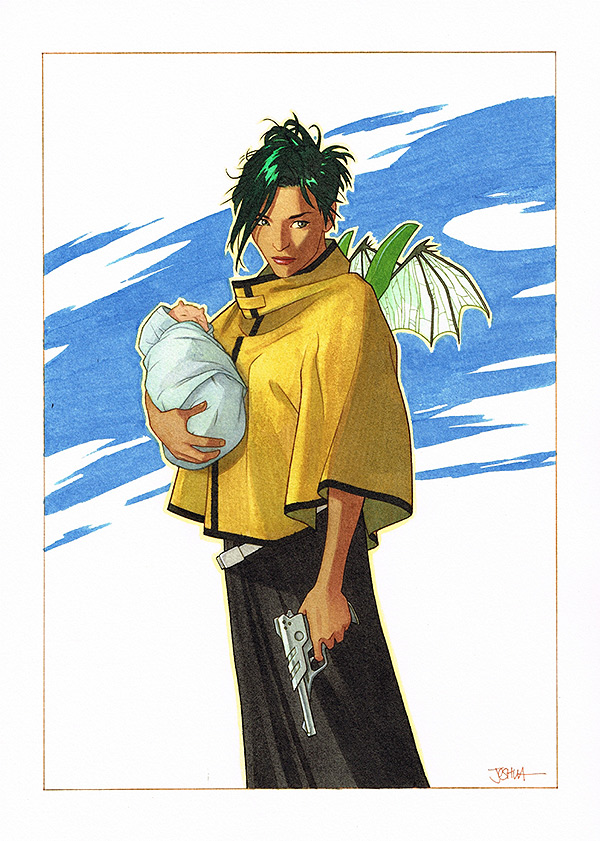 What makes her interesting is her role in the lovers-on-the-run dynamic; she’s the warrior-hothead! She’s the one with raging sexuality. She’s the one who acts with her “dick”. It’s a smart gender-reversal on Vaughn’s part, and it makes for better, if not delcious, reading. And since she is a soldier, it’s all acceptable… (even the yearning for pacifism) and being a soldier, she’s completely taken off-guard by the whole “mother” stuff… which again, is what you’d expect from the male in the relationship.
I actually think Alana is under-scripted (so far), because the series has focused on Marko and his family… so I’m going to put money down that we get to see more of Alana’s family/social baggage in the next story arc. I think at two trades are available for SAGA.
MAGIK — Illyana Rasputin makes the list, because I haven’t read an X-Men comic in over a decade (how can any read that dizzying Moebius Strip of a comic with continuity and character flips that is deliberately done is BEYOND me). However, I was tempted to pick up the “Battle for the Atom” cross-over the Brian Michael Bendis guided. And while the crossover was same-old/same-old (although Bendis’ skill is making not a chore to read must be commended), the only character that renewed a spark in what I did love in the X-Universe from the 70s and 80s, was Magik.
The early 80s miniseries that really explored her powers and the demon Belasco that she is/was connected to sealed the deal for me in thinking she was a hypercool character. I don’t even know if that mini has been re-printed as a trade, I’m sure it has and if so, it’s well worth picking up. It was one of writer Chris Claremont’s most interesting offshoots from the general X-men continuity.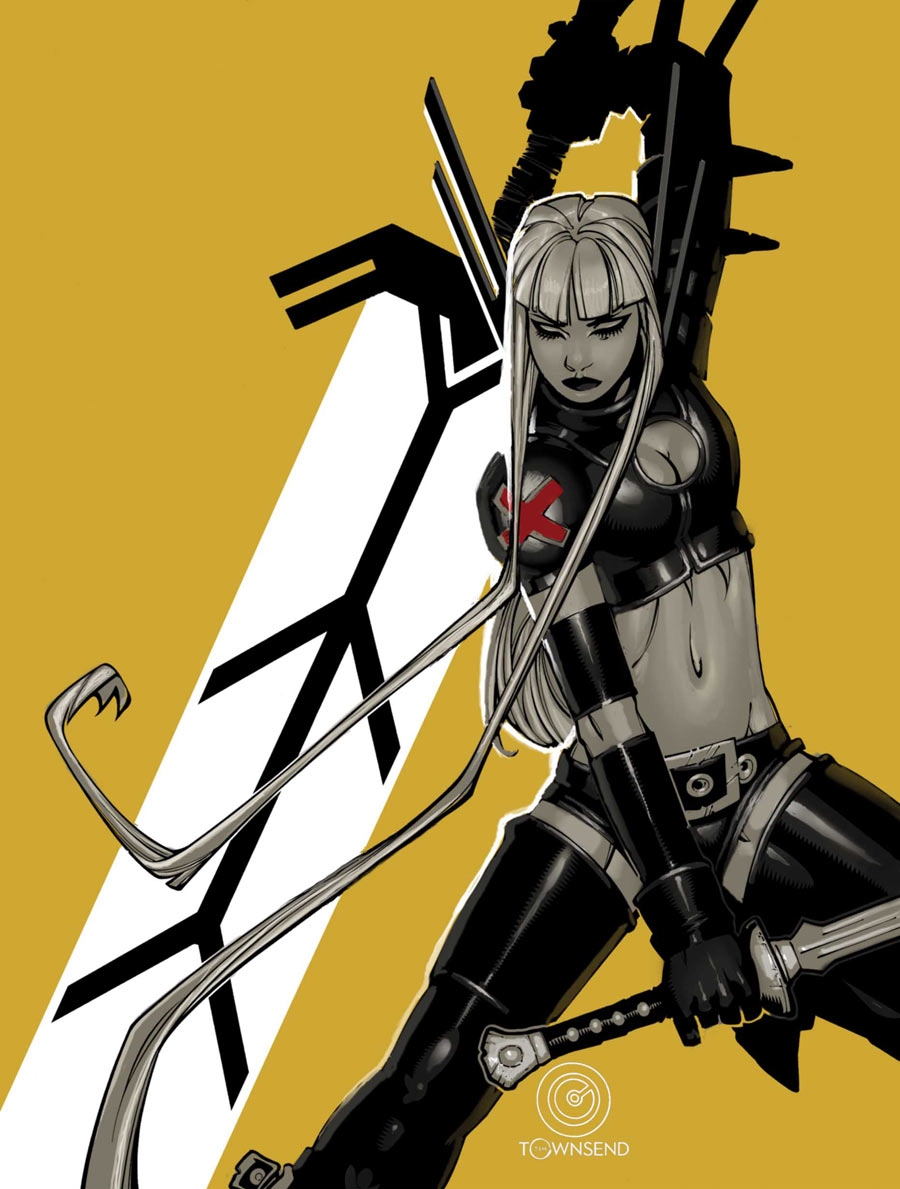
Magik never got a lot of “panel time”, because she’s sort of beyond the struggles of the mutants in the X-Universe having the demon world of Limbo to lord over, but she’s been brought back some time recently (as I said I haven’t read an X-book in a decade), and that’s a good thing.
MARY in Brian Woods’ THE MASSIVE; another tough as nails/I-don’t-take-shit-I-give-shit character, but there’s something about this elusive eco-gangster that actually keeps the book’s underlying premise (which is a little soft) mysterious and intriguing. We never know how Mary is going to behave or react — and outside of the dramatic tension that always brings — she seems to have some extra-normal powers.
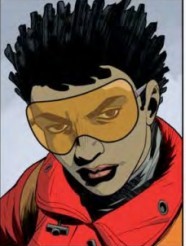
And Mary is such an enigma; this allows Woods to have a lot of fun with her. Nearly two years in on the book, and we know very little (if that is to believed) of his backstory, how she hooked up with Israel or what her passions, dogma and beliefs are. I think I read somewhere that Woods was only going up to issue 30 with this book, so we’ll probably not learn enough about Mary before the story ends…
SUZIE in Matt Fraction and Chip Zdarsky’s SEX CRIMINALS; this book is some cool shit — in concept and execution — as it claims to be a “crime” comic (it can’t be that obvious), but it’s more about sexual exploration of a young woman and a young man who share the power to stop time when they have an orgasm! If the lettercol is ANY indication of the idiosyncrasies that we all have when it comes to sex and what interests Fraction, this will be a got-you-in-a-headlock series.
I’ve only read two of the four published issues, but there’s something extra genuine, yet impish about Suzie that makes delving into her world fun and introspective. She’s telling the story of her sexual awakenings and early experimentations and how they actually led to her learning how to control her time-stopping power. It’s a trip, because this is a way for us to have this story told and not have it be maudlin or something in the Judy Bloom realm.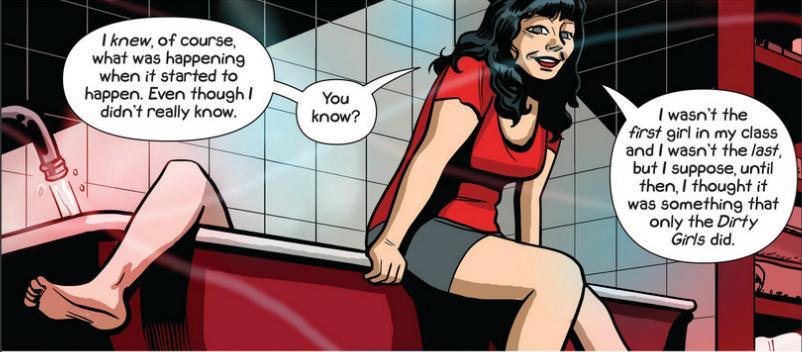
HAWKEYE — the girl, Kate Bishop — the young, spunky, garrulous does a bang-up job as the “new” Hawkeye, but I think that has a lot to do with how Matt Fraction (that guy again) scripts those books and David Aja draws the panels. She’s more than a sketch, she’s a full-blown character with all the complexities that you want from a character, particularly a female character in the comics.
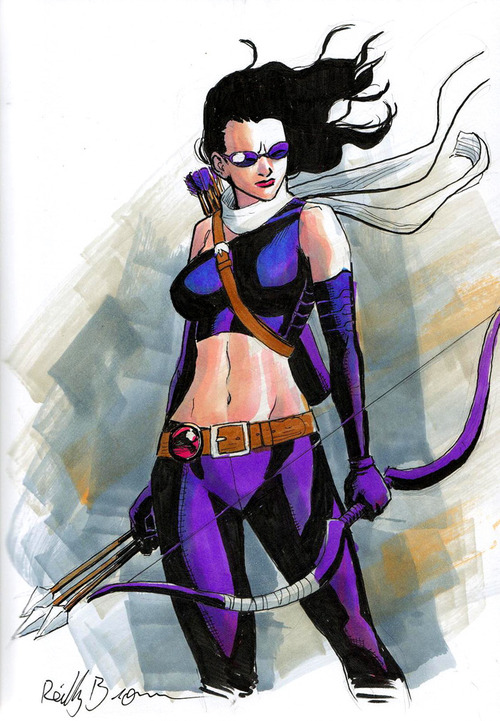 How she interacts with Clint Barton is plausibly authentic for that “elder guy trying to TEACH the younger girl” dynamic (even though she ends up teaching him more about life)… there is a sexual tension component to their relationship, but it’s not pronounced (in fact all the female characters in Clint Barton’s life are exceptionally executed). There are already two Hawkeye trades (vol.1 & vol. 2) that you can read to get your healthy dose of the snappy girl.
LEE WARD – last on the list (but this list is in no particular order; can’t categorized women, they all have their own pluses and minuses) from Scott Snyder and Sean Murphy’s THE WAKE. The first 5 issues, part one of this 12-issue saga, just wrapped and I believe the next issue doesn’t kick in until February.
Lee is a dynamic character with a shrouded past that I don’t even think she’s fully comes to grip with. A marine biologist with a concentration in whales (just trying to be concise) by trade who has sacrificed a lot (namely a marriage and full relationship with her son, Parker, which she’s trying to keep strong) before she’s called away for a top secret government mission. She’s smart… no, astute is a better choice of words, and she drives the action and understands the forces the scientist A-Team is up against.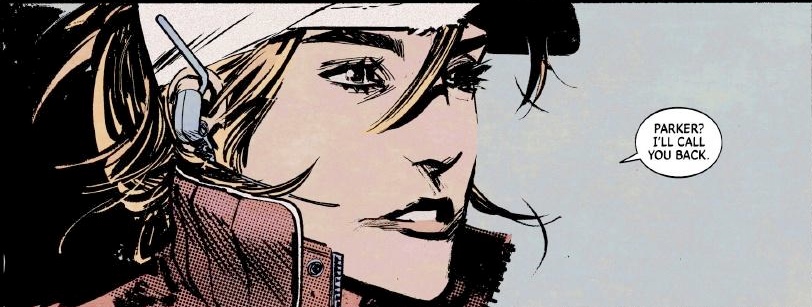
All these female action stars wouldn’t get a chance when it comes to the movies (and I wager that also has a lot to do with action films, with their big budgets, are slaves to the diktats of the international marketplace, where women are still, predominantly, held in less regard), but they’re commanding a lot of attention in the comics world.
To a certain extent most of these female characters “act like men”, but I think that’s the point — they face the problems the men has predominantly faced in comics and literature, and they get to be the “hero” most of the time. Yet, they’re still uniquely women, and well-characterized women at that.
It makes for richer storytelling, don’t you think?
Rene
January 21, 2014 - 7:57 am
If there is a “problem” with female characters, it’s the same problem that any other “minority” character faces.
I always feel that minority characters have more traps to contend with. They’re expected to be “role models” in a even more strict way than white, male, straight characters. Any mistep can risk offending people with an agenda. So they over-compensate, and there is the problem of making the character too invulnerable, too good. And that is already a problem even with male action heroes.
I admit that sometimes I have to sigh as I watch or read about yet another “sassy, strong, independent, take charge” woman. It has become such a cliche. It’s like in DOCTOR WHO, where Rory Williams ends up being a more sympathetic character than Amy Pond, because he is allowed to be more human, more uncertain, more dependent. The “weak” guy steals the show from the “strong” girl. Ironic
Not that characters that start with this cliche can’t become interesting, once the writers delve more deeply into them. I love Buffy. I loved Aeon Flux and the Nikita movie (but Nikita wasn’t your usual “strong” woman, she was deeply messed-up and existential). I loved Sigourney Weaver and Linda Hamilton and Jodie Foster and Uma Thurman, when they played strong women.
But I feel like we should have gone on to the next step of allowing female characters in genre fiction to be as diverse and potentialy flawed as the males. I feel like the need to have the females to be always ultra-independent sometimes limit the amount of sympathy a reader or view can have for them. Using the DOCTOR WHO example again, Rory seemed like he needed a hug, much more than Amy.
George Haberberger
January 21, 2014 - 10:44 am
If you watch Terminator and Terminator II back to back, LInda Hamilton’s performance as Sarah Conner in amazing. The character’s evolution, which began in the final scenes of the first movie, should have garnered Hamilton an Oscar nomination.
Christopher Derrick
January 21, 2014 - 7:06 pm
George — Linda Hamilton’s performances in both films is ENTIRELY underrated. I don’t think those movie work as well with our her transformational journey – physical and emotional; just look at the next two films and how they didn’t have the same impact. And it’s no wonder they’re rebooting the series with the actress who plays Danerys Targaryan.
Rene — I feel what you’re saying, and that’s sort of my point there is an inherent vulnerability to many of the female action heroes I mentioned maybe not Mary from THE MASSIVE, but certainly Alana, Lee and Kate Bishop…it’s still too early for us to know about Ever Carlyle’s feelings. However, Rucka did such a good job with Carrie Stetko (sp?) for WHITE OUT that I’m sure once we get deeper into series.
If too feel like there is a generic “tough girl”, but that’s more of an archetype that, in skillful hands, is just the surface of a character and the more vulnerable and soulful expressions of the character — the complexities and contradictions — is what we see.
Buffy is a prime example; that show doesn’t connect as well to audiences is it’s about a young male vampire killer. The struggles of being a teen girl transitioning into a woman, which Whedon excelled at, made the series resonate nearly a decades later.
And sure there are a lot of “invulnerable” female characters, Black Widow, Domino and Elektra immediately come to mind (hopefully Nathan Edmonson gives us a more hurt-soul version of Black Widow in his upcoming series).
David Rhoades
January 22, 2014 - 1:49 pm
I always appreciate the depth of thought that goes into these columns. I bought SAGA Vol. 1 a while back and really enjoyed the madness and soul that make up that book in equal parts, and when I went to go get Vol. 2, I was totally peeved to learn that the series was barely finishing up its second arc, much less was collected in trade form.
This is why I never start reading any series that recently launched. I can’t deal with that monthly wait, dude.
Rene — what you’re saying is totally spot on. One reader once asked a writer (I forget who) how they could win with writing POC, since he found that writing a deeply flawed POC character felt like insulting representation, and writing exclusively thoroughly “noble” POC characters seemed patronizing, and her response applies to women and POC in general: “Easy. Write more characters of color. The problem with including just one POC in your story is that your character inevitably becomes a representative of everyone single person in his/her group. The reason white characters are so three-dimensional and rounded is because no one white character bears the burden of representing all white people in the world. Write more characters of color. Allow them to be flawed or noble or varying shades of both without having to stand in for thousands of people. If you write more than one, it allows each of them to be individuals.”
Christopher Derrick
January 22, 2014 - 4:38 pm
David and Rene, you both make excellent points about the burden that Characters of Color must shoulder — it’s something that can only be changed by continued CoC being written with the extra-textured nuances of all the characters that we all love.
It just takes a commitment to do it right, and not play it short or played safe in hopes of not offending.
Although, we know Michael Davis has pilloried Mark Millar for his wantonly lazy POC character who is super-smart, gets his powers and becomes a crime boss — and that kind of retro (in a bad way) characterization.
It takes no less effort, but perhaps more acute thought, to create a CoC and then make him the lead of a book (or TV series or movie). I say acute thought, because you have to be astute to not fall into the traps of media-influenced expectations of a POC. It’s like David Fincher’s choice to cast Tyler Perry in GONE GIRL as the brass attorney, who is clearly white in the book, but a huckster. And if Perry can carry it off, then it’s a major coup.
Re: SAGA trades… yeah, that IS the problem with the trades. I rarely read trades, I’m more of the monthly individual, physical copies. Waiting can be pain, but that’s (for me) part of the joy of reading comics. That anticipation of what’s coming next and I can’t read it now!
Rene
January 23, 2014 - 9:47 am
Our fiction doesn’t reflect the diversity that we see in reality, particularly in multi-ethnic countries like the US and Brazil (my own country). We need more characters that aren’t WASP males, a lot more.
Brazil is even worse than the US, in my opinion. Soap operas are huge here, and are primetime entertainment. And if you watch them, you might think you’re in Scandinavia, because almost every character is white. When there is a black family in a Brazilian soap opera, they become “the black ones” in that story, distinguished by their race and representing all black families.
One of the many reasons that BUFFY was awesome was that you had at least 50% of the main cast being female, sometimes more than 50%. That allowed for variety.