Heart Like a Wheel, by Martha Thomases – Brilliant Disguise | @MDWorld
June 21, 2014 Martha Thomases 1 Comment
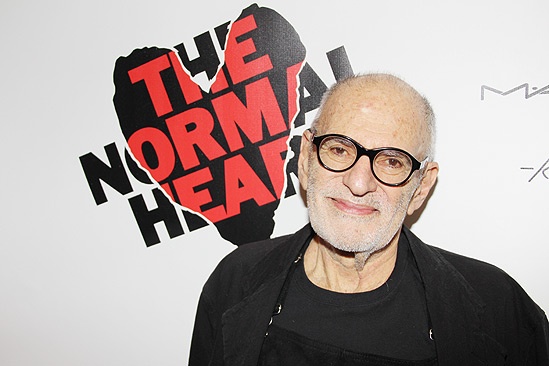 It’s been a few weeks since I saw The Normal Heart on HBO. I thought it was brilliant, and continue to refer to it a lot in conversations with a wide variety of people, and on a wide variety of subjects.
This might seem odd, since The Normal Heart, which began as a play in 1985, is very much a product of its time, and a product aimed at a specific audience. Larry Kramer wrote the play to document the AIDS crisis, and would reportedly rewrite scenes regularly as the epidemic affected local and national politics. It ran for 294 performances Off-Broadway, and has enjoyed revivals around the world.
Larry Kramer was a screenwriter turned novelist turned activist. He was one of the founders of the Gay Mens Health Crisis and, later, when GMHC frustrated him, ACT-UP (the Aids Coalition To Unleash Power). Over the years, I’ve given a fair bit of money to GMHC, and I’ve always thought that ACT-UP had the best graphic design in the movement. Kramer lives about a half a mile from me.
As far as I know, we’ve never met. I’ve read some of his journalism, but not much more. Still, I admire his passion, and his ability to get things done. It’s easy to find people with strong opinions, but much more difficult to find people who will take action.
The HBO movie took me right back to the mid-eighties, a difficult time for people of my generation. HIV was a new disease. Initially, no one knew where it came from, or what caused it. HIV affected gay men, drug addicts, and Haitians (leading to one of my favorite sick jokes at the time: What’s the worst thing about AIDS? Telling your parents you’re Haitian).
Because none of those groups enjoyed mainstream status, the culture at large didn’t consider their deaths to be important. Many judgmental people of various political stripes said that HIV patients deserved their illness because of their unsafe lifestyles. Amazingly, these same people did not consider people who rode in automobiles to be deserving of death by car crash because of those unsafe lifestyle choices.
As New Yorkers go, I was pretty lucky. I can count the people in my life lost to AIDS on my fingers and toes. Many of my friends lost everyone in their address books (except me). However, because of the people I lost, I witnessed the barbaric ways that people with HIV were treated by hospitals, by landlords, by the government and by members of their own families.
However, I’m not now, nor have I ever been a gay man. By the time HIV was an issue, I was in a married, monogamous relationship with a person who had also never had a sexual relationship with a gay man. I did have a relationship in the early 1970s with someone who used IV drugs, but I lucked out and have consistently tested negative.
Larry Kramer wasn’t so lucky. He saw the disease go through his friends like a fire in California. It was terrifying before anyone knew what caused AIDS, and horrifying after they found out. The LGBTQ movement was relatively new, and there were lots of discussions about what HIV meant to the sexual choices people made. Kramer was in the middle of a lot of those discussions. Theoretical hypotheses about the heterosexist patriarchal oppressiveness of monogamy suddenly became matters of life and death.
It’s clear in The Normal Heart on which side Kramer comes down in these discussions. It’s also clear where he stands when there are arguments about whether or not to work within the system or outside of it. He wants to save his own life, and those of the men he loves. He will not waste time on kissing the asses of politicians or make compromises when lives are at stake.
But here’s the thing: Even as the character who speaks for him screams at those with whom he disagrees, he lets us see their points of view. We see that they, too, think their ideas will save the most lives. We see that they, too, are losing people they love.
In today’s political environment, where the people who are the most extreme get the most media time and the biggest book contracts, we don’t often acknowledge that those with whom we disagree might think they are doing the right thing. Those of us on the Left often accuse each other of insufficient ideological purity, and it seems like the Right is now doing the same thing (see: Cantor, Eric). We would do well to remember that we’re all in this together, and at least try to agree on goals, if not tactics.
My goal is for everyone to die of old age and natural causes.
Media Goddess Martha Thomases finds that her definition of what constitutes “old age” gets higher every year.
Howard Cruse
June 21, 2014 - 7:25 am
It’s good that important stage works like “The Normal Heart” (and Tony Kushner’s “Angels In America” before it) have been given a permanent place in our culture (thanks to HBO) that not only document theatrical moments that might have otherwise receded from memory but that document them well, preserving the visions that made them powerful in the first place. And it’s probably no coincidence that in both these cases the respective playwrights were integrally involved in the process of adaptation.