Why Do I Feel So Sad, by Martha Thomases – Brilliant Disguise | @MDWorld
January 24, 2016 Victor El-Khouri 4 Comments
My friend is hurting.
There’s not a lot I can do about it.
Not because he hasn’t been a part of my life for nearly 25 years. He has. Not because I don’t love him. I do. And not because I don’t want to help him. Of course I do. But rather, because I’ve suffered from depression most of my life, and there are a few truths I’ve learned about the disease.
Nobody can get you out of your depression but yourself.
You see, depression isn’t simply feeling sad. It’s a disease <https://www.nimh.nih.gov/health/topics/depression/index.shtml>. And, to quote from the link, “Most likely, depression is caused by a combination of genetic, biological, environmental, and psychological factors.”.
Like other complicated diseases, it’s not one simple thing. It’s not just sadness, but hopelessness and despair and lethargy and a heavy feeling and insomnia and just listing all these symptoms makes me feel bad. As we discussed last week, complicated diseases are so different for each sufferer that there is not a single prescription for everybody.
What works for me might not work for my friend. Treatments that don’t work for me might make my friend feel better.
Because there are psychological factors, talk therapy can be an effective treatment. Because there are genetic factors, prescription drugs can be an effective treatment.
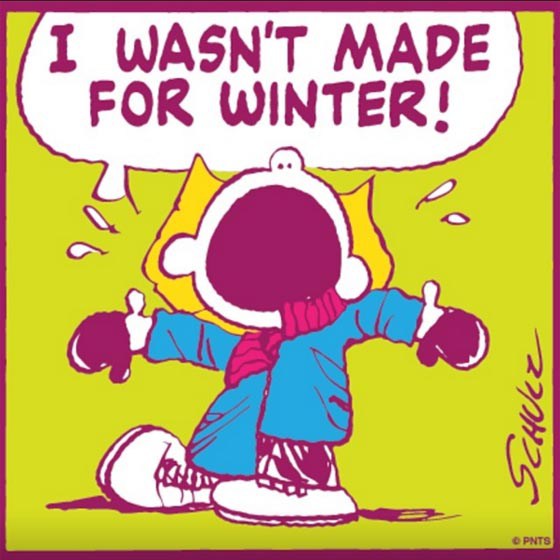
A lot of people get the wintertime blues, so many that it has a name: Seasonal Affective Disorder. Unfortunately, despite having a name, it might not be a real thing.
Here are some things we know about treating depression in general:
• Smiling and laughing, even when you don’t feel like it, might help one feel better. Or, as they say in AA, “fake it till you make it.”
• Exercise and orgasms produce brain chemicals that improve mood. However, lethargy and a lack of libido are common symptoms of depression, making those two activities (or one single activity, if you’re lucky) even more difficult.
• Getting up, out and about can break up a routine that contributes to depression.
Sometimes, it seems, our society doesn’t believe that mental illnesses are real sickness. My own parents, when I would tell them I was depressed, would (sometimes) react as if I had insulted them. They would point out how great my life was, how many people in the world didn’t have the same opportunities available to me, and how I should be grateful to have the life I have.
And I am. But that doesn’t stop me from feeling depressed. If anything, it makes me feel worse. What’s the matter with me that I can have the love of my family and friends, and creative opportunities and financial security, and still not be satisfied?
When we talk about mental health issues these days, we’re mostly talking about identifying people who might be dangerous. Conservatives, most recently, use mental health issues to divert discussions about gun control. I agree that keeping mentally ill people away from guns is important, even more important than GOP senators seem to feel, since they are blocking a bill that would give a small amount of money to help that problem. Here’s a quote: “The bill authorizes $40 million to extend funding for mental health courts for five years, creates more crisis intervention teams to work closely with police, and offers veterans better screening for mental health problems stemming from trauma and chemical dependency.”
Prescription drugs made the difference for me. They don’t take away the gloom, or the bad thoughts, or the gloomy bad thoughts, but they enable me to push them aside and get on with things. Each little accomplishment I achieve makes me feel a little bit better, so that I can go on to the next thing.
There is also a theory that depression is anger turned inwards. When something makes you angry and, for whatever reason, you can’t express your anger (e.g. you’ll get fired or you’ll get arrested or you’ll get shot), you get depressed. People who have no control over their lives also get depressed in greater numbers than those who are allowed to make decisions, so that, for example, bosses get depressed less often than their employees.
If this is true, the increasing inequality in America would seem like a contributing factor in depression. So would racism and sexism and homophobia and all the other forms of bigotry.
Here’s something that works for me that I don’t see suggested often. Volunteering on a regular basis gets me out of the house and thinking about something besides my own trivial problems. Giving time is better than giving money, because I don’t have enough money to have any real impact on serious problems. The kind of volunteering I do gives me face-time with people, so that I have to smile (sincerely or not) and they say “Thank you,” so I feel like I’m really helping. If I was a person who loved working with animals or plants, I would probably get the same naches by volunteering at a shelter or community garden.
The point is not that self-sacrifice is so virtuous, or that I have all the answers. Rather, by choosing to do this, I have exerted some control over my life, and I’m making a (minor) contribution to solving the world’s problems.
In the meantime, I want my friend to know I’m thinking about him. Because life is too damned short and he’s too fabulous.
Media Goddess Martha Thomases welcomes the upcoming East Coast blizzard because then she can wear pajamas all day.
Sheila
January 25, 2016 - 12:11 am
Martha Thomases, I want you to know that in my 56 years on this earth, I’ve only said this about a handful of people. You’re GOLDEN.
Lonya
January 25, 2016 - 9:51 am
Ditto, Sheila.
One of the toughest things for me is knowing of the enormous dissonance between my outward persona – extroverted, charming, funny, kind (pardon my lack of humility here) and the inner quasi-tortured self. My thoughts turn in the “if they only knew direction” but how would they know unless I told them? And who would I tell? I did reach out during my last relationship and was told something along the lines of hey, I came to you for YOUR strength not for your weakness. I just looked and said, here’s your key back, now go away. So much for reaching out, eh?
Been like this since high school. If you look at my yearbook photo I start off with Scaramouche: “He was born with a gift for laughter and a sense that the world wsa mad. And this was his patrimony.” But even then I knew that was a reflection, or deflection, from a darker space.
Getting out and volunteering does work for me. At least I am not sitting at home. And I do like the thank yous and the compliments about whatever. But the “if they only knew” is never far below the surface.
But at the end of the day, I have a job I like, a community I like and a daughter that’s grown up strong and true. That generally gets me out of bed every morning. So it ain’t all bad I guess.
Great piece, Martha. I hope I cheered you up! 🙂
As always.
tom brucker
January 26, 2016 - 5:59 am
Call me ignorant. Your boyfriend was as sensitive as a rock. Self awareness is a great strength. No one else has the responsibility to fix you, but having a community which now has a context for your pajama jokes is going to make our interactions less superficial. My bipolar sister and I talk on a higher level (and regularly) because her disease has made our connections into moments of import.
Disease doesn’t define us. Maybe 60 years of wear and tear is too much for some, but survivors use their tools, their self awareness, and actions to stay in the present. Love you!
Howard Cruse
January 26, 2016 - 8:26 am
Your column certainly resonated with me, Martha. I spent fifty years assuming that being regularly assaulted with bouts of sadness and despair were to be expected for any presumably sensitive and creative person. Imagine my surprise when I learned, thanks to therapy and appropriate meds, that it was possible for me to sustain a relatively cheerful outlook with only minor and manageable episodes of melancholy (and who wouldn’t be occasionally melancholy, given the world we live in), and that I was still able to have full access to my creativity. Good for you for finding productive ways to keep your spirits up; I hope your friend can take heart from your experience.