Regarding Haiti, By Whitney Farmer – Un Pop Culture
January 13, 2010 Whitney Farmer 0 Comments
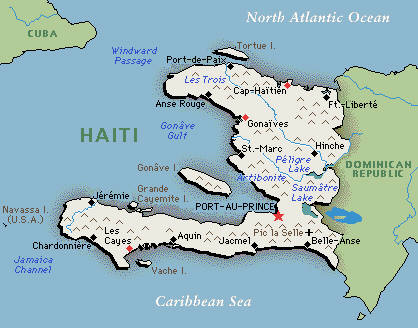 When Columbus landed on the island of Hispaniola where the nation of Haiti is now located, he wrote in his journal that he had found Eden. He wrote of it being the breast of the earth and dripping with milk.
With the monstrous earthquake that struck that island today, the world’s gaze is resting on her, this place, which now most closely resembles Hell. It wasn’t always this way. But beauty incites envy which provokes avarice which invites power. Be warned now that this blog entry is a buzz kill, but I know you’re up to it.
Within 25 years of Columbus’ landing, the Taino tribe that called the island home was extinct. How this began is part of the legacy of Columbus. He had promised gold to the Spanish crown. When he couldn’t find enough, it was his idea to enslave the people. After a brief time, the once free and now slaves rebelled. They were slaughtered by the occupying conquistadors who had been trained in genocide during the Inquisition which had been launched by the same Queen Isabella who had launched Columbus’ fleet.
With the Taino dead, replacement slaves would be needed to work the fields. The Spanish crown looked to Africa, and this is where it all began. The first African slaves brought to the Western Hemisphere arrived in Haiti. They began to work the sugar plantations, a very damaging crop to cultivate which leaves the land stripped of nutrients. The descent from paradise to Hell continued with the destruction of the land. Massive deforestation began as slash and burn farming for the sugar harvest was used alongside the conquistadors’ slash and burn warfare, another Inquisition tactic that was perfected in Alhambra to leave enemies with neither shelter nor food. Colonial rulers changed, but the destructive work continued the same under each.
Even with this, the country was approximately 91% forested at the turn of the 20th century…until the United States stepped into the arena as an occupying force and tried its hand at being a colonial power. From 1915 to 1934, the U.S. ruled this land. This is when severe environmental degradation took hold, most often through poorly conceived and politically corrupted public works projects. Halliburton – yes, that one – was one of the largest U.S. contractors there at that time. There was one project – to build a dam for the Army Corps of Engineers – which illustrates how things can go horribly wrong.
The dam was built to provide hydroelectric power to an area which didn’t even have power lines. Probably still doesn’t. As the water rose, it engulfed the fertile land in the valleys that allowed the farmers to cultivate surplus crops as well as enough to feed their families. Because of this, the farmers were driven into higher elevations and steeper slopes to try and work the land. This required deforestation, and the removal of the trees on these steeper slopes precipitated the loss of topsoil during the rainy season. And the loss of topsoil caused erosion and the land became arid. So, the farmers were forced to move higher. And begin the process again. And again. That area now has no arable land. An account of this is found in the book Mountains Over Mountains, the story of Harvard’s Paul Farmer, M.D. founding Zanmi Lasante.
Haiti is now the poorest country in the Western Hemisphere. 80% of her people live in poverty with 54% in what is defined as abject poverty. The largest industry is agriculture. Within this, charcoal production continues to be a major activity. Two thirds of her exports are described as from the apparel sector, a significant portion of this being recycling used clothes. The annual wages earned are $1,300 per person. The revenue for the entire country was reported as $11.53 billion in 2008 dollars, with a 0% industrial production growth rate. No domestic oil or natural gas production or reserves. It has two radio stations and two television stations. The population is 9,035,356.
This land, the second one in the history of the world to establish a democracy after witnessing the model of our Revolution, needs help. Our help.
Haiti needed to be rescued before this earthquake, but now the world can see her for a brief season, until the next disaster arrives and distracts us. I had written to a relief agency a few months ago that I wanted to do some type of event for Haiti at the Club. I envisioned a concert that is taped that could generate evergreen revenues to support relief work there. I was thinking of Matisyahu and Wyclef Jean and No Doubt and others…I haven’t heard back yet, and I don’t know what else I can do. But this is something. And this might help. Tomorrow, I’ll start making some calls…
Mike Gold
January 13, 2010 - 12:51 pm
Great work, Whitney. I thank you very much for providing deeply critical background to this horrifying story.
When the story broke yesterday, Linda wondered what more could happen to these people. That’s when it dawned on me: the media almost always finds some expert to deliver a body count. It doesn’t matter if they’re right, people want to know how many died. So they mitigate it with language like “right now projections are in the thousands, maybe tens of thousands. We’ll have an update for you as it becomes available.” Six mitigating words out of twenty-two.
Not this time. The early reports didn’t have even a guess. That’s when you know the shit has hit the fan.
Reg
January 13, 2010 - 1:51 pm
Whitney, I totally co-sign with Mike. Many thanks to you for writing this article at a time of horrific human tragedy. I have friends from Haiti who are desperately waiting to hear from families members. I’ve donated to the Red Cross and am encouraging as many as I can to do so as well. This is mind numbingly awful.
Whitney
January 13, 2010 - 1:58 pm
Mike –
Reports are coming in that say that the capital of Port-a-Prince has basically been flattened. The estimated population within the immediate quake area was estimated at 3,000,000. The Presidential Palace which housed U.N. peacekeeping operations has been flattened. None of the three Red Cross relief centers in the area are operational. Doctors Without Borders has lost contact with most of its 800 personnel there.
I’m trying to walk my talk. I started the day with a straight cash donation to a reputable organization. NOTE TO ALL: Only give to established organizations right now to make sure your funds are used well, and try to give money rather than goods that need to be shipped. I’m also starting some calls that might lead to a concert event that could help with rebuilding efforts. I’m praying to God that I hear some fast and real “yes”s…
Whitney
January 13, 2010 - 2:07 pm
Reg –
Red Cross is one of the best NGOs to give to by far because they can also coordinate with multiple agencies and have credibility before many governments, and they are in the middle of it right now.
This does numb the mind. But thank you for not letting it freeze you out of action. I’m ferociously clinging to hope of rescue and restoration for your circle of those with family there.
Reg
January 13, 2010 - 2:28 pm
CNN has provided a list of AID organizations at the following link.
http://www.cnn.com/SPECIALS/2007/impact/
MOTU
January 13, 2010 - 3:30 pm
WHOO WHITSTER!
Fantastic work, I’m in.
Mike Gold
January 13, 2010 - 3:35 pm
Whitney — I’ve used some of your research on my Weird Scenes commentary on The Point this Friday, properly attributed to both you and MDW. I want to thank you before this group, our extended family, for your help, your effort, and your caring.
Mike
pennie
January 13, 2010 - 6:12 pm
Whitney, thank you.
On some web-sites I read, some were complaining that with our problems in this country, we shouldn’t worry about sending aid to Haiti. That’s just heartless.
In 2005, when Katrina devastated New Orleans, this was a list of countries who sent US help:
* Afghanistan: $100,000
* Albania: $300,000 pledged
* Armenia: $200,000 pledged
* Australia: $7.6 million
* Austria: tarps, camp beds
* Azerbaijan: $500,000
* Bahamas: $50,000 pledged
* Bahrain: $5 million pledged
* Bangladesh: $1 million pledged
* Belgium: operations teams, generators, water pumps, nine-member logistical team to work with the Red Cross
* Bosnia/Herzegovina: $6,414 pledged
* Cambodia: $20,000 pledged
* Canada: $5 million pledged to the hurricane relief fund headed by former Presidents George H.W. Bush and Bill Clinton, two Griffin helicopters, search and rescue teams, Air Canada evacuation flights, supplies, security team, three Canadian forces ships with three Sea King helicopters
* China: $5.1 million, 1,000 tents, 600 generators, bed sheets
* Cyprus: $50,000
* Djibouti: $50,000 pledged
* Equatorial Guinea: $500,000 pledged
* Eupropean Commission: Civil Protection Cooperative Mechanism activated
* France: 600 tents, supplies
* Gabon: $500,000 pledged
* Georgia: $50,000
* Germany: high-speed pumps, supplies
* Greece: two cruise ships
* Hungary: $5,000
* Iceland: $500,000 pledged to the Bush-Clinton Katrina Fund
* International Committee of the Red Cross: Web-based tracking system for displaced people
* India: $5 million; 3,000 each of personal-hygiene kits, blankets and sheets; 150 tarps
* Iraq: $1 million pledged to the Red Cross via the Red Crescent
* Ireland: $1 million euro (about $1.24 million U.S.)
* Italy: generators, water pumps and purifiers, tents, supplies
* Japan: $200,000, $844,000 in supplies and private pledges of more than $1 million
* Kenya: $100,000
* Kuwait: $100 million plus an additional $400 million in oil products
* Malaysia: $1 million to the Red Cross
* Maldives: $25,000 to the Red Cross
* Mauritania: $200,000 from the American Mauritania Business Council to the Red Cross
* Mexico: 45 truckloads of supplies, transport vehicles, two field kitchens, two helicopters
* Mongolia: $50,000 pledged
* Morocco: $500,000 pledged
* Nepal: $25,000 pledged
* Netherlands: Levee inspection team to assist Army Corps of Engineers, water pumps, frigate
* New Zealand: $1.4 million to the Red Cross
* Nigeria: $1 million pledged
* Norway: $1.54 million in cash and supplies
* Oman: $15 million
* Organization of American States: $25,000, created fund for donations from member states to the International Committee of the Red Cross
* Pakistan: $1 million pledged to the Red Cross, supplies
* Palau: $50,000 pledged plus $50,000 donor drive
* Papua New Guinea: $10,000 to the Red Cross
* Qatar: $100 million pledged
* Republic of Korea: $30 million, supplies
* Russia: air transport, generators, tents, blankets, water, water pumps, supplies
* Sao Tome and Principe: $18,000 pledged
* Saudi Arabia: $5 million from Aramco, $250,000 from AGFUND
* Singapore: four helicopters
* Spain: relief supplies
* Sri Lanka: $25,000 to the Red Cross
* Sweden: telecommunications equipment
* Taiwan: $2 million, supplies
* Thailand: blankets, supplies
* United Arab Emirates: $100 million pledged
* Uganda: $200,000 pledged
* United Kingdom: relief supplies
* Venezuela: up to $1 million to the Red Cross and state governments
* Vietnam: $100,000 to victims
* Yemen: $100,000 to the Red Cross
SOURCE: State Department
With such a tough history and so few resources, I’m hoping there’s a similar, if not more substantial global outpouring of support and immediate help.
Thanks again.
Alan Coil
January 13, 2010 - 7:44 pm
1. Why didn’t I learn this information in High School History?
2. Bill Clinton spoke today and said give money. They don’t have the logistical means to move tons of donated items from the public. I’m guessing that means it is far more efficient to buy and ship mass quantities from central locations.
MOTU
January 13, 2010 - 8:34 pm
MAN, I LOVE THIS SITE!!!!
Whitney
January 14, 2010 - 12:37 am
To All but particularly to Mike Gold –
I got one of my stats wrong: I stated incorrectly that the per capital annual wage was $1,300. This is in fact the per capita Gross Domestic Product (what they personally spend, what they invest, and what the government spends on them). The annual wage is actually much worse: $580 per person, as of 2007. But this is not a weighted average. The majority of people in Haiti live on about $1 a day.
Whitney
January 14, 2010 - 1:01 am
Alan –
I don’t know why kids don’t get more complete information in school. I first learned about the country of Haiti when I bought the December 1976 edition of Crawdaddy magazine as a kid with my allowance. The cover story was about the first Star Trek movie that was going into production. But the magazine also had a story about what it was like to spend three days in Port-a-Prince as a tourist during the times of the Tonton Macoute death squads. I still have that magazine.
And Bill Clinton’s recommendation about giving money instead of goods/services is exactly right for at least two reasons: Transportation logistics, as you said, and inventory storage and management. To give an analogy, think of how much quicker and inexpensive it would be for you to travel if you weren’t dealing with luggage but would rendezvous with what you needed at your destination. And if an agency is purchasing essential supplies with donations rather than gathering, it is easier to confirm quality as well as to store, etc…a box of bandages that comes sealed from the factory states “100 count” and doesn’t have to be checked by personnel in an already desperately understaffed crisis.
Whitney
January 14, 2010 - 1:20 am
Pennie –
If there was the same outpouring, the contributions could probably exceed the GDP for that desperate country last year.
It was fascinating to look at your list and try and see how many of the donations were politically motivated and to what degree. I don’t care, as long as help arrives.
It’s also a mistake to assume that the U.S. can afford to turn our back on our crippled little sister democracy. Eventually, nations and individuals reap what they sow. Pearl S. Buck said that the test of a civilization is the way it cares for its helpless members. My fellow Americans, we have just been handed a pop quiz.
R. Maheras
January 14, 2010 - 1:38 am
Personally, I don’t need a guilt trip to help people in need. I do that on my own accord because it’s the right thing to do.
I was on the second chock of aircraft — a C-5 Galaxy — that flew into Haiti, uninvited, in 1994 — part of the armed force President Clinton sent in to depose the local tinpot dictator Gen. Raoul Cedras. Like most bullies, he was a coward, and he just grabbed a pile of the people’s money and meekly left without firing a shot. Which was probably just as well, because a shooting war would have been even worse for everyone involved.
My point? We’ve been helping Haiti for decades, and we would have continued to do so during this tragedy even without any “Haiti’s-misery-is-all-the-U.S.’s-fault” sermons.
Mike Gold
January 14, 2010 - 8:34 am
Alan: “Why didn’t I learn this information in High School History?” That’s the most important, most significant question I’ve heard in a long, long time.
Whitney: Damn, I miss the real Crawdaddy. I wrote for them a bit in the early 70s. Great magazine.
R: Yes, you certainly don’t need a guilt trip. Sadly, some people seem to. I haven’t heard any “Haiti’s-misery-is-all-the-U.S.’s-fault” sermons, but the United States did play its part during its relatively brief custodianship. That has nothing to do with the present situation, but it is a matter of history.
History is a cruel mistress. I’m still pissed about Hawaii.
Whitney
January 14, 2010 - 11:18 am
R. –
I remember the Cedras situation, and I was proud of our country’s response. And you were right about an unholy pattern: For decades, bullies have seized power in Haiti and then shoved money in their pockets as they ran out of town. I was watching a report with a Red Cross worker last night who was stating the extreme developing need for security in order to do their job. On Anderson Cooper, someone in the crowd behind the news crew shouted, “Water!” People began to run and the journalists weren’t certain if the crowd was running TO water because they were thirsty or AWAY from water, afraid that a tsunami was hitting eventhough the alerts had been cancelled. A later commentator stated that someone had set up a false alarm so that the crowd would run away and leave their belongings behind to be scavenged. True evil tends to be most visible next to the truely vulnerable.
Regarding reflecting on the past: Sometimes family needs to cover difficult territory with each other and can say things that no one but blood can say. I view the U.S. during the time of our Haitian occupation as being the teenage years of a strong and beautiful country. We were full of energy and power, but needed more experience to develop wisdom and compassion and true strength. What President Clinton ordered — and you executed — was in my opinion a perfect example of mature statesmanship. I love what you did.
Whitney
January 14, 2010 - 11:19 am
Mike –
I’m going to check my Crawdaddy and see if you have a byline in this one!
Reg
January 14, 2010 - 11:29 am
There are hardly words to express the degree of devastation and chaos happening there. While sitting with our Haitian friend last night, at some point she looked at me and said, “My country was destroyed in 35 seconds.”
What can one say to that?
Whitney
January 14, 2010 - 11:48 am
Reg –
Maybe the answer is already in what you wrote: “…While sitting with our Haitian friend…” Only a small part of what we say is what we speak. You are there. She isn’t alone.
Alan Coil
January 14, 2010 - 12:29 pm
Whitney said:
“Maybe the answer is already in what you wrote: “…While sitting with our Haitian friend…” Only a small part of what we say is what we speak. You are there. She isn’t alone.”
This brought a tear to me eyes. I don’t know why, but it did.
McCarthy
January 14, 2010 - 2:00 pm
A very good friend of mine is there and was interviewed briefly this morning:
http://www.npr.org/templates/story/story.php?storyId=122556049
Whitney Farmer
January 14, 2010 - 9:33 pm
McCarthy –
Thanks for this link! NPR always tends to say so much in a minute and a half clip. Keep us posted on your friend. Send our blessing from this — as Mike said — extended family.
Whitney Farmer
January 14, 2010 - 9:34 pm
Alan –
Thank God you are one of those who can cry.
Reg
January 14, 2010 - 9:39 pm
Whitney,
There is Light even in the deep darkness. We sat and prayed with our friend for her nation but in particular for the survival of her 94 year old father in the midst of the devastation. She shared that her father routinely brought persons into their home who needed help…and until this week continued to give meals to those who were hungry. Just a few minutes ago she called to tell us that she had just received word that her father is alive!! That this 94 year old man remains alive is nothing less than a miracle! That she was able to get word that her father is alive is a miracle! I give fervent thanks for the evidence of this and pray that there be many, many, many more that are wrought.
And I thank YOU.