The Grand Vision Of Epic Cinema, by Chris Derrick – Sympathy for the Devil #12 | @MDWorld
March 15, 2012 Chris Derrick 7 Comments
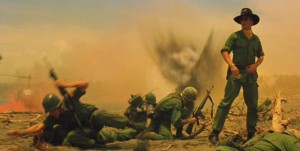 Spectacular vistas… cast of thousands… tortured characters… 70mm Technicolor…
When you think of these qualities, you think of epic cinema. And epic cinema happens to be my favorite “film genre”; I put it in quotes, because most people wouldn’t consider it a genre. So maybe a subgenre?
Anyway, epic cinema has always been an intriguing part of film history ranging back to the silent era with such seminal films as the maligned (and rightly so) BIRTH OF A NATION (1915), the stunning sci-fi of METROPOLIS (1927) and the 3-screen feat of Abel Gance’s NAPOLEON (1927) are key examples and only set the stage for what was to come.
During the height of Hollywood’s Golden Age (late 1930s) and then into the Technicolor Era (early ‘50s to late ‘60s), the Dream Factory churned out a slew of bold and ambitious films that expanded the concept of what now call epic cinema.
The way I see it, epic cinema is a category of film that typically pushes the technical processes of the day to achieve impressive visual glory while expertly exploring the depths of humanity. These films are more than just large-scale spectacles (all though many are just that… every thing by Cecil B. Demille), the best of this “genre” typically don’t have just huge central stories, but are filled with small, personal stories told against an larger-than-life backdrop with universally potent themes that cements their enduring appeal.
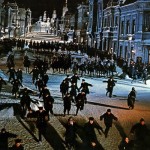 Take David Lean’s Dr. Zhivago (1965), this is essentially a love story in which the doomed lovers are denied happiness because a little thing called the Russian Revolution stands in their way. The proportion of the star-crossed lovers is only matched by Cameron’s TITANIC (1997), and neither film would play nearly as well without the eye-popping scope of the massive context.
Three critical elements to what made the epic films of 1950s and 60s different from the Silent and Golden Age epics are the sprawling location shooting, 70mm or similar widescreen photography and the impressive international casts.
Freed from the constraints of southern California’s studios and aided by improvements in filmmaking technology (color & widescreen photography, lighter cameras), Hollywood’s visionary directors and producers traveled to Europe (and elsewhere) to shoot on location to amplify the scope and realism of each film.
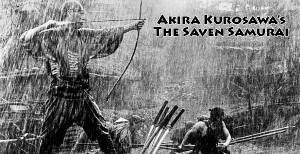 David Lean’s THE BRIDGE ON THE RIVER KWAI (1957) takes us to Southeast Asia during the height of WWII for an epic story of a small band of British and American commandoes on a life-or-death mission to destroy a supply train in the middle of the Burmese jungle; in Robert Wise’s SOUND OF MUSIC (1965) we soar to Vienna, Austria for an epic musical drama on the eve of WWII where a repressed family learns to laugh, live and love through the zestful antics of a recalcitrant nun and Akira Kurosawa’s THE SEVEN SAMURAI (1954) transports us to feudal Japan to witness an epic battle as a band of rag-tag swords-for-hire defend a poor village from unstoppable and relentless brigands.
What adds to the dramaturgy of epic cinema is the casting. The internationally-cast epics introduced dozens of fresh faces that soon be came worldwide superstars – Peter O’Toole and Omar Sharif from LAWRENCE OF ARABIA (1961), Claudia Cardinale and Alain Delon from THE LEOPARD (1963) and Toshiro Mifune in THE SEVEN SAMURAI– to name a few – expanded the universe of stars and exposed the audience to people who brought new dramatic technique and humanity to the silver screen.
Director David Lean, perhaps the most-respected epic filmmaker, utilized international casts, far-flung locations and jaw-dropping photography is his three back-to-back epics BRIDGE ON THE RIVER KWAI, LAWERENCE OF ARABIA and DR. ZHIVAGO, vividly and expansively shot in 70mm (the original high-definition format) and raised the bar for all epic cinema to follow with their grand sweep, emotionally-potent personal stories and unforgettably-compelling performances.
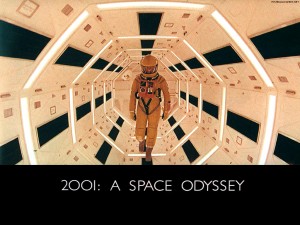 Epic cinema is by no means regulated to telling historical tales, Stanley Kubrick’s 2001: A SPACE ODYSSEY (1968) is perhaps the most well-know and respected sci-fi epics of all time, a controversial conundrum at its release, the film still wows audiences today over 40 years later… And Francis Ford Coppola’s APOCALYPSE NOW! (1979) was a contemporary (at-the-time) hallucinatory Vietnam War odyssey like no other before or since.
Joseph Mankiewicz’s CLEOPATRA (1963), starring Elizabeth Taylor and Richard Burton, effectively rung the death knell on epic cinema and the ever-increasing cost required to produce these mammoth films spiraled out of control, and was 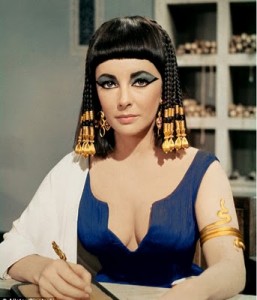 hamstrung by the torrid affair between Taylor and Burton (as rapturous as Brad Pitt and Angelina Jolie in Mr. & Mrs. Smith only with triple the budget at stake).
Last year I saw screening of CLEOPATRA at the American Cinematheque (a newly-struck 70mm print of the “most expensive film ever made”), which confirmed the unique and eye-popping grandeur of this epic, with awe-inspiring sets and lavish costumes that surpass the scope and emotional sweep of even such films as Cameron’s AVATAR (2009)… and mainly because you know and feel that everything in the frame was actually built.
Any one set piece in CLEOPATRA would be the major moment of most other films, even other epics, but there are about a dozen in this epic of all epics. No wonder the film bankrupted 20th Century-Fox and regulated these films to a rarity in the modern era.
I was recently talking with someone about THE SEVEN SAMURAI, and I was compelled to view it again (in Blu-ray, finally) and it was monumental… to say the least! Kurosawa takes a simple plot and expands every aspect to it; and remarkably it doesn’t feel like a 3-hour film. The added bonus of seeing it in Blu-ray is that you get see photographic details that have been missing in nearly all home video prints (and I haven’t been lucky enough to see this film projected).
In fact, the latest DVD and Blu-ray presentations of any of these epic films enable you to see all the pain-staking attention to detail of these films, with a quality and clarity (arguably) not experienced even by the original filmmakers.
—
Additional Recommended Epics:
Spartacus (1960), The Ten Commandments (1956), The Good, The Bad & The Ugly (1966), El Cid (1961), Reds (1981), Patton (1970), Exodus (1960), Amadeus (1984).
Mike Gold
March 16, 2012 - 4:57 pm
Ah, yes! The good old days of Hollywood, when the business and its denizens actually requested a good story!
JosephW
March 17, 2012 - 12:30 pm
I trust you realize that
“Freed from the constraints of southern California’s studios and aided by improvements in filmmaking technology (color & widescreen photography, lighter cameras), Hollywood’s visionary directors and producers traveled to Europe (and elsewhere) to shoot on location to amplify the scope and realism of each film.”
is a statement that does NOT apply to Kurosawa and “The Seven Samurai.” Kurosawa was a director that one could never describe as being part of “Hollywood.” (His sole foray into “Hollywood” led to the disastrous “Tora! Tora! Tora!”)
Additionally, “The Seven Samurai” doesn’t really benefit from any of the other “critical elements” listed for the “epic films of the 50s and 60s”:
“the sprawling location shooting,”: Only if you’d consider Bakersfield, California to be “sprawling location shooting” for a Hollywood film. The Izu Peninsula (where “The Seven Samurai’s” village was set) was about 100 miles–at its most distant–from Tokyo (where Toho Studios was located). Granted, Kurosawa built the village for the film but we’re not talking about having to build with steel and concrete and brick and mortar. Yes, it was a major cost for the film but your element was the “sprawling location shooting” and this wasn’t really the equivalent of flying an entire multi-national cast and crew to Ceylon (now Sri Lanka), as Lean did for “The Bridge on the River Kwai.”
“70mm or similar widescreen photography”: I’ve not read anything suggesting this. All I’ve seen is that Kurosawa used 35mm film.
“and the impressive international casts”: Only in the sense that a film like “Alexander Nevsky”–with its ALL-Russian/Soviet cast–is “international.” If you’d written “multi-national casts,” I wouldn’t have a problem (though, again, “Seven Samurai” wouldn’t qualify there either). From a “Hollywood” perspective, an American film featuring an American lead with a variety of British, French and German actors in major supporting roles is an “international cast.”
Christopher Derrick
March 19, 2012 - 5:25 pm
@JosephW — I’m fully aware that I took a leap by including Kurosawa’s film in this conversation, but it epitomizes the grand scope of epic cinematic imagery juxtaposed with an intense personal drama that makes this “subgenre” of films interesting and nostalgic. Note that I included Gance’s Napoleon and Lang’s Metropolis as the silent epics, which aren’t Hollywood films or color or 70mm (although Gance’s triptych is its own thing). Also, The Leopard certainly isn’t a “Hollywood” film, even though it stars Lancaster. However, the explosive power of the Hollywood epics undoubtedly inspired the likes of Leone and Kurosawa for their own epic masterpieces (color and/or b&w).
I get that you’re a diehard Kurosawa fan (and what film fan isn’t?), and by including his films in my discussion I’m implicitly expanding the soft boundaries that I explicitly mention. The sprawl of the Village Set in Seven Samurai is impressive (maybe not Cleopatra impressive, but nonetheless impressive) and critical to the telling of that vast film story.
As an addendum, I’ll posit: “The new technology of the ’50s & ’60s that Hollywood popularized enabled a broader brush to be used to enhance and expand the storytelling process and presentation of many of the Hollywood and international epics.”
In terms of casting, yes, Kurosawa didn’t scour the globe to find suitable Japanese actors for this films — but the point of my statement is that Toshiro Mifune did BECOME an international star (see Hell in the Pacific) after the world was treated to his performances in Seven Samurai, Yojimbo, High & Low and the others.
Also, if we’re to going persnickety technical; then are you saying I shouldn’t have included Doctor Zhivago as “epic cinema” because it was photographed in 35mm(!) then blown-up and released primarily in 70mm; albeit, I didn’t limit myself to solely 70mm with the “70mm or similar widescreen” pharse, the similar photography could and does encompass VistaVision, SuperTechnirama, Sovoscope, Panavision, etc.; there are no rules and I’m not trying to be a Andre Bazin. I didn’t mention Kenneth Branagh’s Hamlet in my “recommendations”, even though it was shot in 70mm, but it isn’t really an epic film (although it is impressive as all get out — 70mm Shakespeare! It was unprecedented at the time will remains so… perhaps for all time).
My comments about “freed from the SoCal studio” was aimed primarily at Hollywood filmmakers, in general, but also in terms of where the money came from — MGM bankrolled Zhivago and 2001, and Kubrick certainly wassn’t a “Hollywood” filmmaker, but technically he is.
Perhaps I should have ended my piece with the caveat that epic cinema has the ability to escape the jingoistic labeling of cinema. Tarkovsky’s Alexandre Nevsky’s cast of Soviets (who knows exactly which Republic they hailed from) might not all be ethnically Russian either.
Rene
March 21, 2012 - 6:23 am
I am a huge fan of David Lean. In my oppinion, what set his films apart from other classic movies like GONE WITH THE WIND and BEN-HUR was a sense of authenticity that I’ve seen in few movies of that stature.
So far, I have watched only LAWRENCE OF ARABIA and DR. ZHIVAGO, but I plan to see his other movies.
SPARTACUS is also very good, and interesting in that it’s one of the few classic epic movies that has a genuine left-wing orientation, something rare in Hollywood epic movies. But I prefer the “real” Kubrick movies.
Did you watch BARRY LINDON? I like it a lot. It’s sort of a cynical deconstruction of the historical epic.
Christopher Derrick
March 21, 2012 - 4:04 pm
Rene — yes I’ve seen BARRY LYNDON several times. It’s considered one of Kubrick’s “minor” works, but it’s emotionally potent. The building squabble with Lord Bullington is great. I hadn’t included it, because 2001 is more impressive and startling. Also BARRY LYNDON seems like a consolation for Kubrick, since he couldn’t mount NAPOLEON.
LAWRENCE OF ARABIA is one of my top 3 movies of all time (I’m currently squabbling with some friends on Facebook as to whether CASABLANCA outstrips it, but not for my money). It’s such a devastating look at a man trying to control uncontrollable circumstances in a situation that doesn’t admire or accept non-conformity.
BEN-HUR is just an omission that I had, as it doesn’t standout in my mind the way say CLEOPATRA does or the other films in the “recommendation” section.
GONE WITH THE WINDOW is too melodramatic, however, had it been made in say 1959 in 70mm with a more subtle script, with some Actor’s Studio alums in the case, and shot on location in Georgia it would be a different and even more potent film. As it stands, it’s just an American big budget Hollywood studio-era film shot in Culver City. (I better I get taken to task for poo-poo’ing though).
Rene
March 22, 2012 - 7:37 am
Well, one of the things I like about GONE WITH THE WIND is that the protagonists are anti-heroic to the point of almost being unlikable. That it is a romance in the tradition of WUTHERING HEIGHTS – two deeply dysfunctional people that are right for each other because no one else would put up with their domineering personalities. In in the end even they can’t stand each other.
To me that is a lot more interesting than a epic romance about two goody-two-shoes that are kept apart only because of social obligations, like TITANIC (even though I also like TITANIC in its own terms).
Another thing I like about GONE WITH THE WIND is the first half of the movie and how it re-creates a lost society and chronicles its destruction. And it’s funny, because intelectually I am very much opposed to the politics of the movie. I don’t think the Old South was romantic at all, and I see slavery as the social cancer that it was, and all my sympathies remain with the North.
But what the hell, the movie is still powerful. I respect the movie even more for managing to make me – albeit temporarily – sympathetic for the enemy.
As for LAWRENCE OF ARABIA versus CASABLANCA, that is a tough choice. They’re both wonderful movies. I think my heart is a little closer to LAWRENCE.
Chris Derrick
March 25, 2012 - 10:10 am
GONE WITH THE WIND certainly has legions of fans… as its still like the highest grossing film of all time (even in inflation adjusted dollars). It strikes at the heart of the American ethos. What you say about the first half of GWTW chronicling the South when slavery was legal and accepted, and the rise of the Confederacy is true and brings up an interesting point that I’ve considered writing about for some time now.
The real birth of our nation was the period after the Civil War, and yet Americans did so much to romanticize the pre-war period for several decades afterwards. Even President Woodrow Wilson (who I guess was a boy during the Civil War) had some startlingly near-revisionist remarks about the period of his youth when he became president.
There’s something about GWTW that still romanticizes the United States during that period post Independence pre-Civil War, almost as if that was the Golden Years of the country’s history, and the movie does a fantastic job re-creating that period and instilling those nostalgic feelings among us… and like you said, you know it’s a morally reprehensible period, but you still want to watch. It’s persuasive powers to cause sympathy with those characters is a true feat of moving making.